

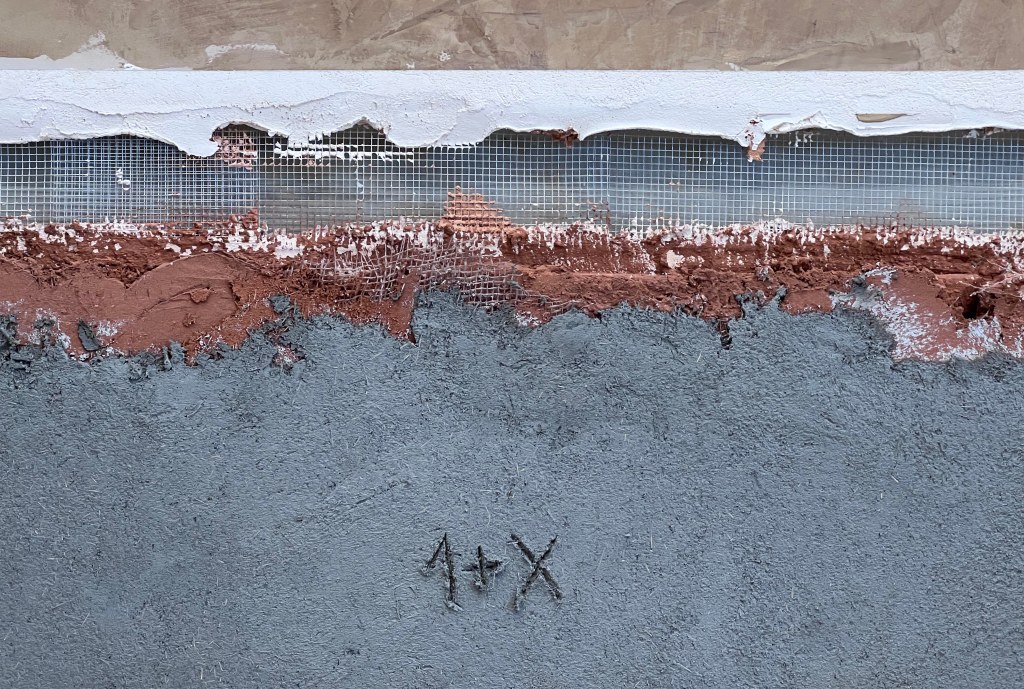

Often when people talk about building materials, concrete, steel, wood or stone immediately come to mind. In the context of insulating materials, mineral wool or expanded polystyrene (EPS) is usually mentioned. But our aim is to broaden people’s awareness of ecological building materials and to present alternative options.
Natural building materials include all materials that can be used for construction and that meet the following criteria: their raw materials are fast-renewing, follow the principles of the circular economy, are biodegradable and store carbon. Ecological building materials include, for example, wood, straw, reeds, limestone, clay, sand, hemp and similar materials. Here we present some of the best-known natural building materials.
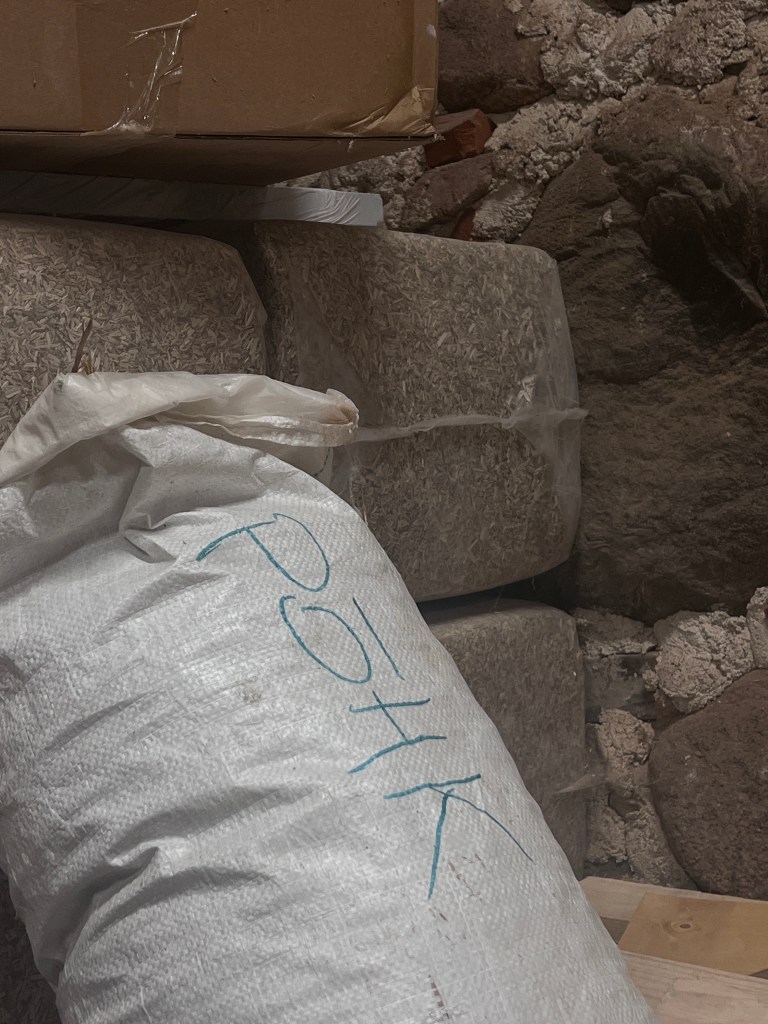
Photo – private collection
Wood is one of the best known ecological building materials and is widely used in a wide variety of buildings. Wood stands out for its strength and can be used to construct multiple level buildings. Wood is widely used in residential buildings, where the load-bearing element is the timber frame, or in classic log houses.
We are familiar with thatch mainly in the form of thatched roofs, and it is also often used to fix natural plasters to walls to improve the adhesion between the plaster and the wall.
Straw has recently made a major breakthrough, as it has become more appreciated and its excellent insulating properties recognised. Straw is a particularly efficient thermal insulation material and a 400 mm thick base wall can ensure the thermal performance of a building. Straw is also a breathable material that reduces allergens and helps to dampen sound while creating a peaceful environment for occupants.
Our team’s previous exposure to ecological building materials was initially minimal. Most of us had seen log cabins and thatched roofs and had clay poured as children, but our knowledge of the uses of these materials was limited. However, this development work has brought us closer to the use of natural materials and we have explored different ways of applying them. For example, we discovered the possibility of using clay in interior wall finishes, where fine-grained clay is smoothed onto the surface, creating an effect similar to marble. We learnt all this at a training course in Estonian construction, where we broadened our horizons by taking part. We will share more information about the training in our next blog post.
Estonian
Ökoloogilised ehitusmaterjalid
Tihti kui räägitakse ehitusmaterjalides tuleb inimestele mõttesse kohe betoon, teras, puit või kivi. Soojustusmaterjalidest rääkides julgeb väita, et 98 % inimestest ütleb kohe mineraalvill või vahtpolüstüreen (rahvakeeli EPS). Meie soovime avardada inimeste teadlikkust alternatiivsete ökoloogiliste ehitusmaterjalide valdkonnas.
Looduslik ehitusmaterjal võib lugeda kõiki materjale, mida saab kasutada ehitamiseks ja mille tooraine uueneb kiiresti, põhineb ringmajanduse printsiibil, biolagunev ja talletab süsinikku. Ökoloogilised ehitusmaterjalid on näiteks puit, põhk, roog, paekivi, savi, liiv, kanep jms. Järgnevalt räägib antud tekst tuntumatest looduslikest ehitusmaterjalidest ja meie kogemusest nendega.

Foto – erakogu
Puit on kõige tuntum ökoloogilistest ehitusmaterjalidest, kuna seda me näeme kõige laialdasemalt kasutuses. Puit on hea tugevus näitajatega, millega on võimalik ehitada kuni neljakorruselisi kortereid. Puitu kasutatakse palju elumajade puhul kus on kandvaks osaks puitkarkass või oleme näinud klassikalist palkmaja.
Roog on meile tuttav peamiselt rookatuste näol ja vahel ka looduslike krohvide kasutamisel pannakse roomatid seinale, et naket krohvi ja seina vahel suurendada.
Põhk on kõige suuremat läbimurret tegemas looduslikest materjalidest, kuna seda on hakatud väärindama ja saadud aru põhu headest omadustest. Põhk on väga heade isolatsiooni omadustega ja puhtalt 400mm põhu seinaga on võimalik saada soe maja. Põhk on heas mõttes hingav materjal, mis vähendab alergeenide hulka majas ja samuti helipidav mis kingib inimestele aega olla oma mõtetega kui nad seda vajavad.
Tiimi 1+X kokkupuuted ökoloogiliste ehitusmaterjalidega olid minimaalsed, kes oli näinud palkmaja, rookatust. Saviga olime me kõik lapsepõlves voolinud, kuid sellega meie teadmised kasutusvõimalusest piirdusid. See arendustöö on viinud meid looduslikele materjalide kasutamisele lähemale ja uurinud erinevaid kasutamise võimalusi. Näiteks uudne kogemus oli savi kasutamise võimalusest seinte siseviimistluses. Kus peeneteralist savi silutakse vastu pinda, kuni pind meenutab marmor pinda. Seda kõike avastasime Eestimaaehitus MTÜ koolituselt, mida meile pakuti ja oleme igati tänulikud. Täpsemalt koolitusest räägime järgmises blogi postituses. Olge muhedad ja püsige 1+X lainel 😉
 1plussx