

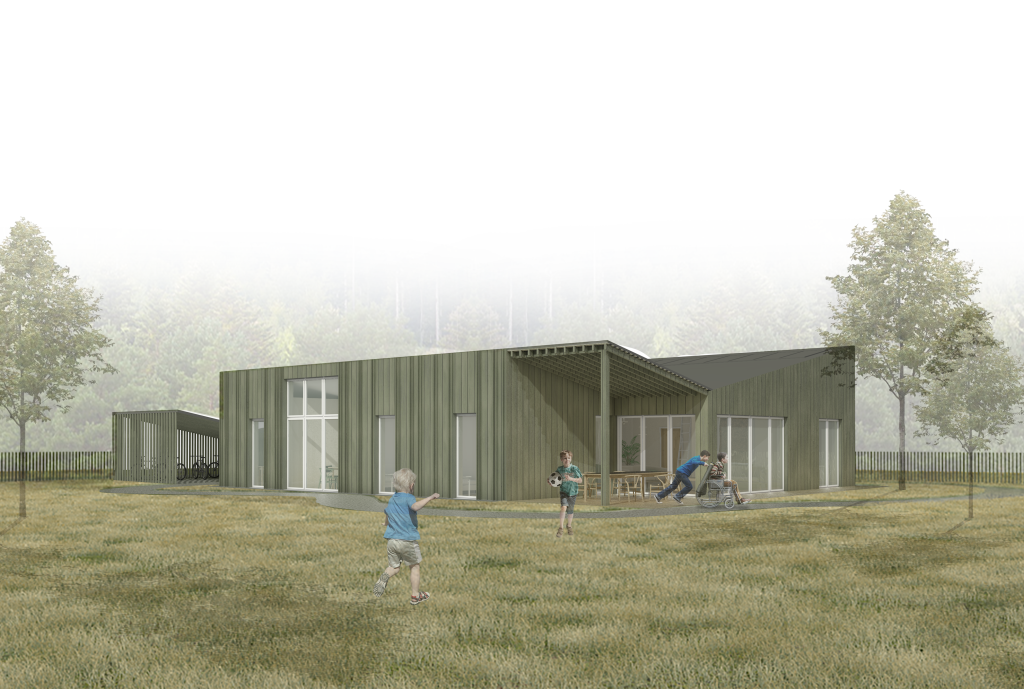

After a long spring semester, we didn’t intend to rest, but decided to take part in an architectural competition organised by ESTDEV. We had already been in contact with ESTDEV before, as we had won their special prize in the Garage48 competition. As soon as we saw the competition’s brief, we realised that it was related to our research topic and we immediately started working on a solution. The aim of the competition was to find a suitable solution for an factory produced family house – SOS Children’s Village typology, which could be used as a model project in Ukraine. The building was designed to densify the urban space between existing housing and to fit into different environments. It was important to create a high quality and homelike environment for children and surrogate parents affected by the war in Ukraine. The theme also overlapped with our earlier SOS Children’s Village concept, which we created for Ukraine in the Garage48 competition

As one of the conditions of the competition was to involve an architect of Ukrainian origin, Iryna Kirs, who works on the Ars project on a daily basis, joined our team. We also needed an architect with signature rights and invited Tiit Silla to join our team. In addition, Renee Puussepp helped us in the development of the modularity. The team became big and versatile.
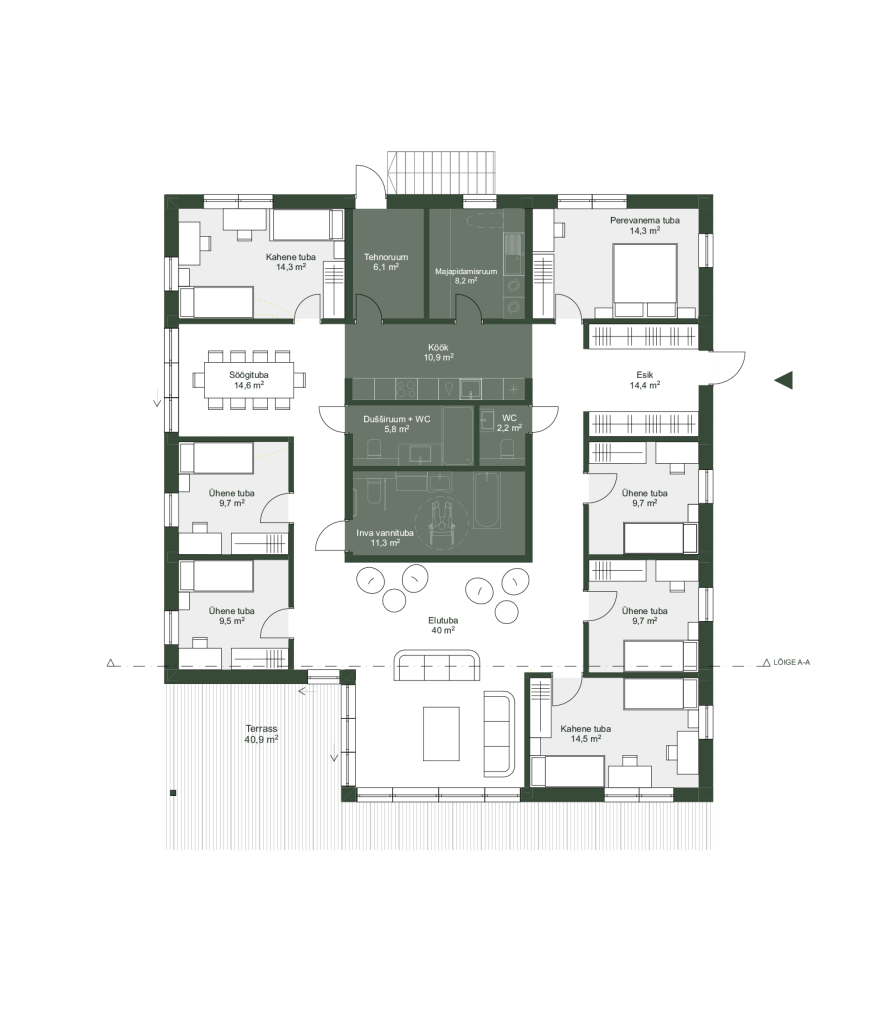
The feedback praised our compact and well thought-out plan solution, which allowed us to avoid the classic corridor building structure thanks to the circular design. We were also praised for the choice of natural and recyclable building and finishing materials – straw, clay, rubble. What was lacking was a solution for the courtyard area and a roof solution that broke up the pattern system and required many different elements.

Probably the biggest lesson was the design of an actual prefabricated house. What would be the most compact and optimal solution, at the same time architecturally exciting and fitting in the context. We realised that designing a prefabricated house in a pattern system involves first solving the construction and only then dealing with the spatial planning. We certainly gained a lot of knowledge about space planning for people with reduced mobility, which will be useful in future work. We can now apply what we have learnt in our own research and find the best solution for designing a prefabricated straw house.
Estonian
Esimene arhitektuurikonkurss
Peale pikka kevadsemestrit ei kavatsenud me sugugi puhata, vaid otsustasime osaleda arhitektuurivõistlusel, mille peakorraldajaks oli ESTDEV. Olime juba varem kokku puutunud ESTDEV-iga, kuna võitsime nende eripreemia Garage48 võistlusel. Kohe, kui me nägime konkursi võistlusülesannet, saime aru, see puudutab meie teadustöö teemat ning asusime kohe tööle ideelahenduse kallal. Võistluse eesmärk oli leida sobilik lahendus tehaliselt toodetavale peremajale ehk SOS-lasteküla tüpoloogiale, mida saaks Ukrainas tüüprojektina kasutusele võtta. Hoonestus oli mõeldud linnaruumi tihendamiseks olemasolevate elumajade vahele ning sobituma erinevatesse keskkondadesse. Oluline oli luua kvaliteetne ja kodune keskkond Ukraina sõjas kannatada saanud lapstele ja asendusvanematele. Teema kattus ka meie varasema SOS-lasteküla kontseptsiooniga, mille lõime Ukrainasse Garage48 võistlusel
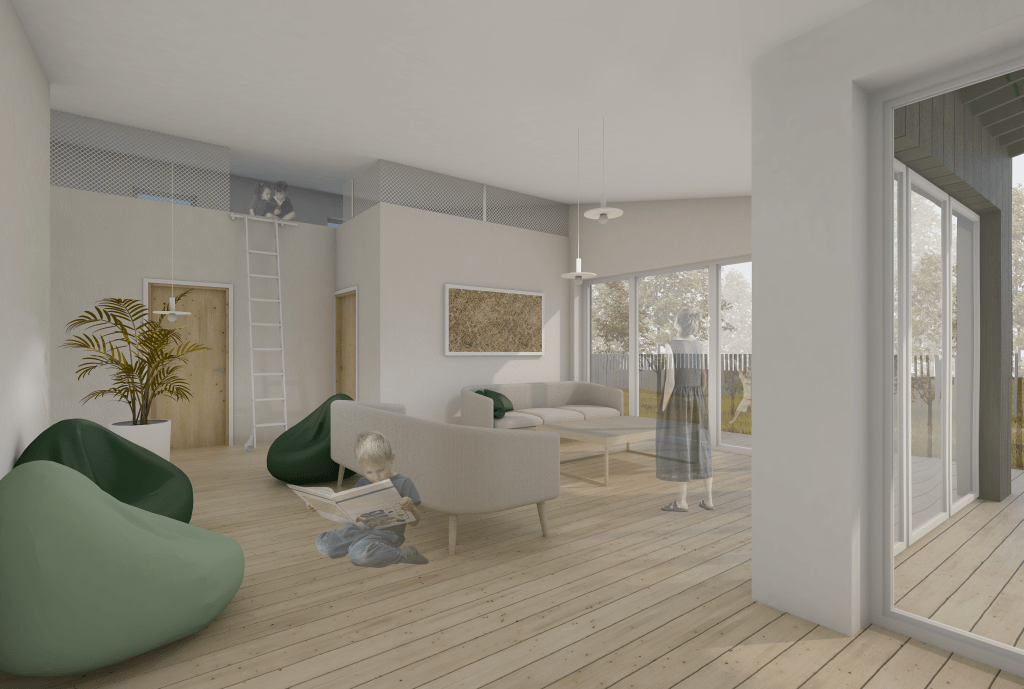
Kuna üks võistlustöö tingimus oli kaasata ukraina päritolu arhitekt, liitus meie meeskonnaga Iryna Kirs, kes igapäevaselt töötab Ars projektis. Samuti vajasime arhitekti, kellel on allkirjaõigus ning kutsusime Tiit Silla oma meeskonda. Lisaks aitas meid modulaarsuse väljatöötamisel Renee Puussepp. Meeskond sai suur ja mitmekülgne.
Meie projektiga saab tutvuda siin
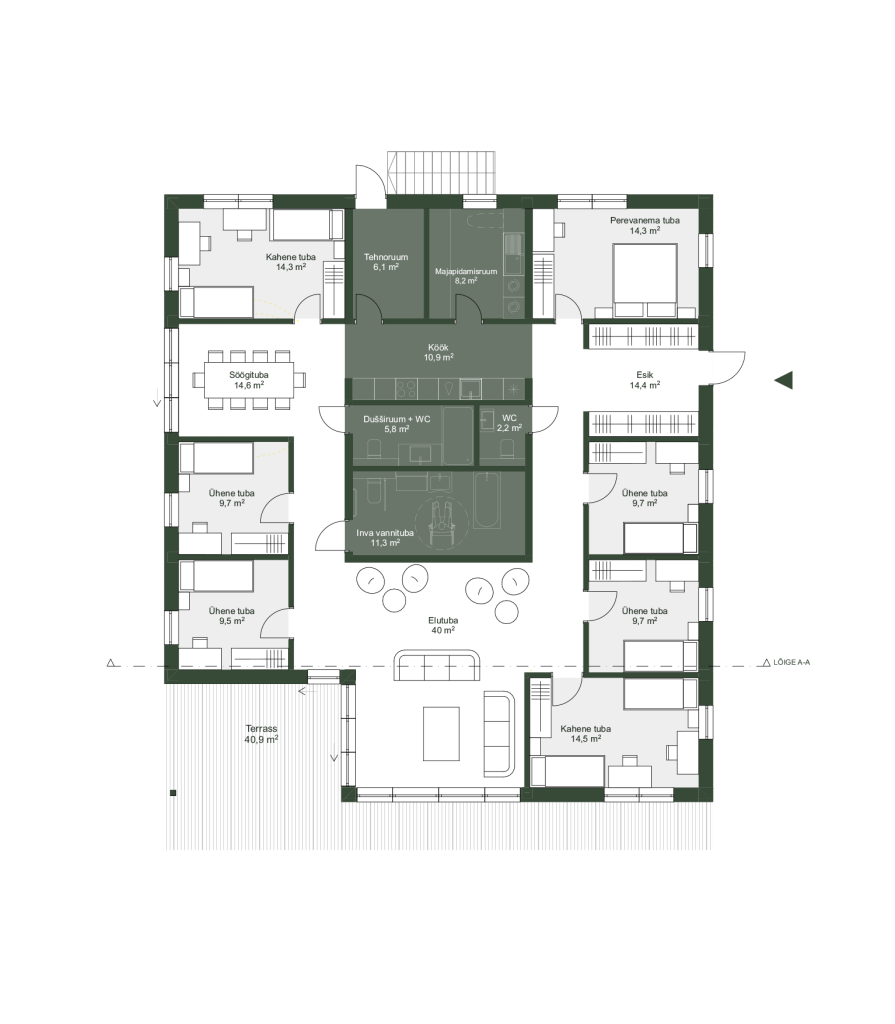
Tagasisides kiideti meie kompaktset ja hästi läbimõeldud plaanilahendust, mis võimaldas vältida klassikalist koridorikeskset hoone ülesehitust tänu ringplaneeringule. Samuti saime kiitust valitud ehitus- ja viimsitlusmaterjalide osas, mis olid looduslikud ning taaskasutatavad materjalid – põhk, savi, rusudest killustik. Puudulikuks jäi meil hooviala lahendus ning mustersüsteemi lõhkuv katuselahendus, mis vajas palju erinevaid elemente.
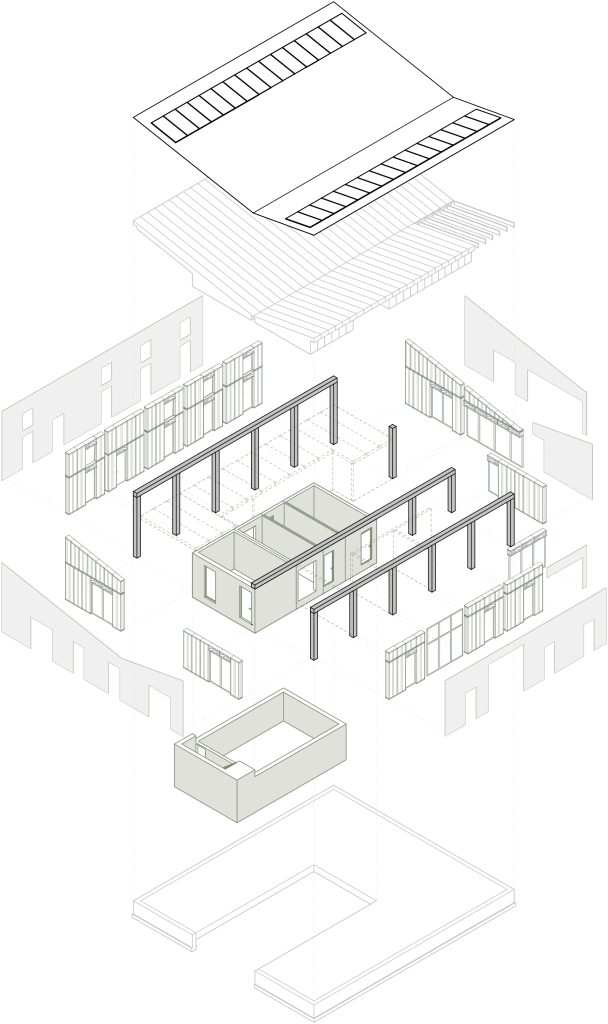
Ilmselt kõige suuremaks õppetunniks saigi tegeliku elementmaja projekteerimine. Mis oleks kõige kompaksem ja optimaalsem lahendus, samaaegselt arhitektuuriliselt põnev ja konteksti sobituv. Mõistsime, et mustersüsteemis elementmaja lahendamine hõlmab endas esmalt konstruktsiooni läbi lahendamist ning alles siis ruumiplaneeringuga tegelemist. Kindlasti saime palju teadmisi juurde ka liikumispuuetega inimeste ruumi planeerimisest, mis tuleb edasises töös kasuks. Kõike seda õpitut saamegi nüüd enda teadustöös rakendada ning leida parim sobilik lahendus põhust mustermaja projekteerimisel.
 1plussx