


The design and construction of modular buildings cannot be limited to straw research. To find out how to build ecologically and with biogenic materials it is useful to look beyond Estonia. That’s why, on a dark November day, we took part in a short clay recycling trip to Paris, organised by the Centre of Estonian Architecture. The focus of the trip was to study clay and how to reprocess it. We visited three construction sites and a raw earth brick factory in Paris. The days were long and intense, but very interesting.
France, with its projects, approach and legislation, is a very important example in our research. France is also known to have the oldest straw house in Europe, the Maison Feuillette, completed in 1920. So far, straw construction is much more common in France than in Estonia. However, they do not have extensive experience with timber construction. Nowadays, due to new CO2 regulations, they prefer clay, straw and wood as building materials.
DAY 1
Media library in Paris I Philippe Madec
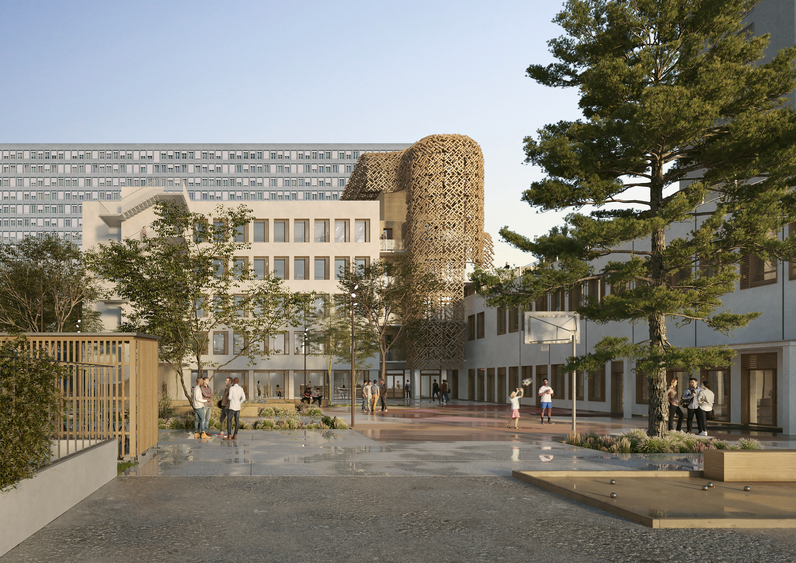
Thursday lunchtime we landed in Paris and headed straight to our first site. This was the media library in Paris, designed by architect Philippe Madec. The architect claims that this project is a manifesto of environmental pioneering and advocacy of detoxifying concrete. The aim of the project is to show that it is not necessary to destroy and rebuild, but that a city can regenerate by preserving old buildings. The idea behind the project was to preserve as many materials as possible without using concrete, to install a low-impact solar shading system (i.e. a wooden mesh), natural ventilation and to use clay panels. The aim of the visit was to hear architect Nicolas Miessner’s experience of the clay panel construction technology.

Picture of the building
(interjection) It was interesting to learn that there is a lot of collaboration between different architects in Paris. For example, in the case of the media centre project, Madec was the project architect, but Miessner’s architectural office was responsible for the clay, as their chief architect has done a lot of research on the use of clay. For Estonians, it is always peculiar to do everything themselves and to exchange as little information as possible with their ‘competitors’. However, with the reduction of carbon pollution, it is necessary to build in a more environmentally friendly way, which means using new building materials. To make the transition easier, an architectural firm does not have to do everything itself. A much better result can be achieved by involving different architectural firms that specialise in different areas.
Nicolas Miessner I Raw earth
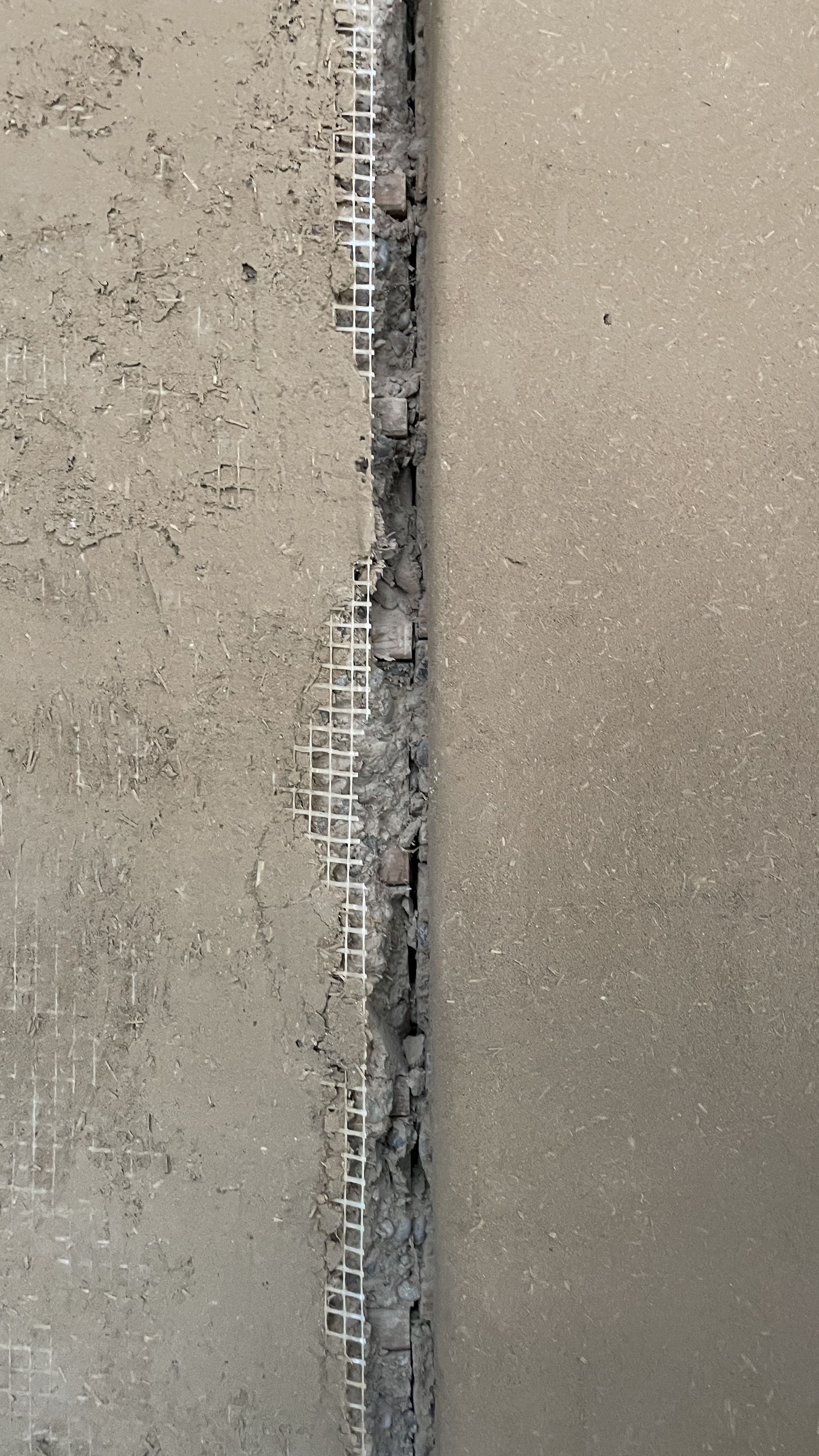
Nicolas Miessner is an architect specialising in the use of raw earth. His knowledge of this material is confirmed by his Master’s degree in raw earth studies, as well as by the time he spent as a trainee at the Auroville Institute in India and his participation in a training course on earthbag casting. For the media centre, he worked with a clay brick factory to develop a special clay mix (containing gravel, raw earth, water and straw) that is poured into the mould like concrete. The aim was to find the quickest setting mix. The cast raw clay walls of the Media Library consist of 28% clay, 71% aggregates and 1% straw. Water makes up 15% of the wet mass. On average, a single cast clay panel corresponds to 1.3 cubic metres or 2.1 tonnes, with a density of 1600 kg/m3. However, these clay panels are not structural and were therefore used instead as infill for the timber frame in the interior to control heat and humidity in the building.
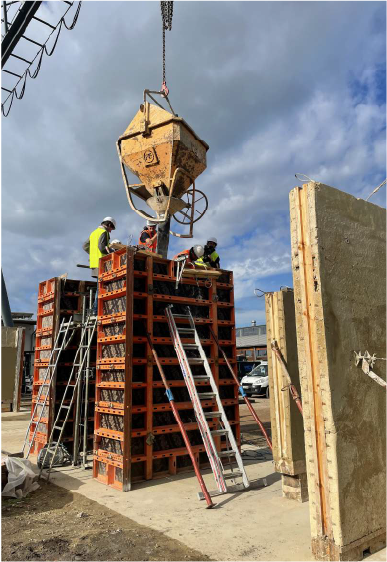

A picture of a clay concrete pour and a finished clay panel
Before handing over the building, a finishing phase will be carried out on the clay panels to repair any damage caused on site and to level the wall surface with a damp sponge. All horizontal and vertical hollow joints between the timber frame and the walls and between the two different walls are treated with cork board or liquid cork injection. A surface hardener such as cellulose glue, casein or wax may be used to harden the surface and prevent scratching. A maintenance booklet will be provided to the customer upon finishing of the building. Any quantity of clay mix will be made available for post-construction work.
1+X Introduction
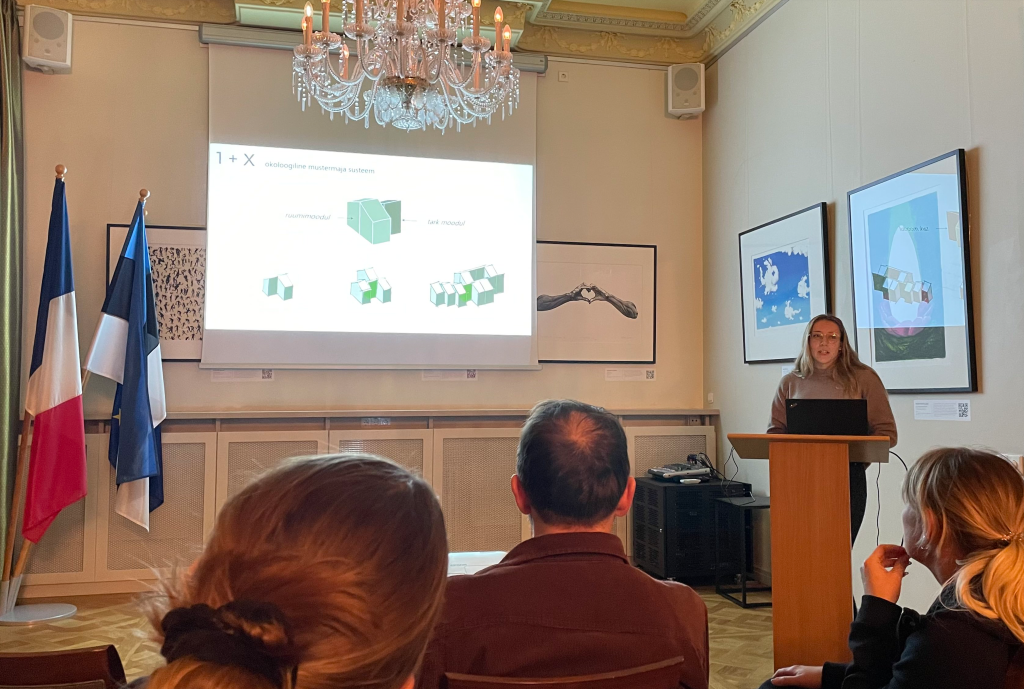
After a two-hour visit to the media centre, we took our suitcases to the hotel and had a nice lunch. It was a very interesting and varied trip. There were familiar faces from the ministry, the city government and also a lot of knowledgeable Estonian architects who were interested in how things are built elsewhere in the world. We were very pleased to see that building with biogenic materials is of interest to everyone. We were also able to introduce the 1+X research group and talk about what we are doing and what our aim is. For us, it was a very important awareness-raising experience for both officials and architects.

Picture of my presentation at the embassy
DAY 2
Housing development I Les Grands Moyens
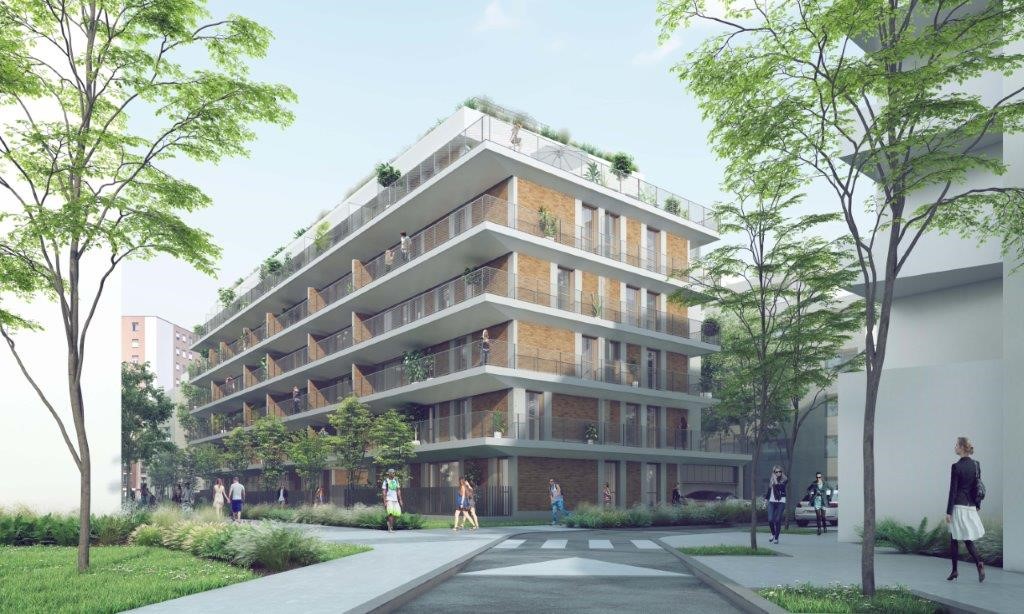
We started the second day of the trip with an early departure to the construction site of an apartment building (6 Rue Romain Rolland, 92220 Bagneux). A representative of the architectural firm Les Grands Moyens gave a presentation on the use of raw clay bricks for the interior walls and façade. Again, Les Grands Moyens were the architects responsible clay brick façade, while another architectural firm carried out the design and vision of the building layout. From this visit we learned a few important things. Firstly, there is a research centre in Paris, the Centre Technique De Matériaux Naturels De Construction, with whom architects can develop and certify new natural building materials. In addition, Paris has a RE2020 regulation that requires 20-30% of projects under development to use ecological materials. This was also a requirement for another architectural firm that asked Les Grands Moyens to design a façade made of clay bricks.
(interjection) There are a lot of new developments in the Bagneux area, just outside Paris. Developers wishing to create new projects in the area are asked to meet the RE2020 requirements. However, we heard that there are also developments that are covering concrete buildings with ‘natural materials’, which are in fact only an imitation of ecological construction.

Picture of the building
In the apartment building project, the raw clay bricks were used only as façade material and were also occasionally exhibited indoors. This project was both a test and a demonstration to show that raw clay bricks are a viable building material. As raw clay, which means that the bricks have not been fired, they are not fully weatherproof and need protection. A mixture of fired and raw clay bricks therefore had to be used on the south-facing terrace on the top floor of the building, as the architects designed the eaves too short for this wall.
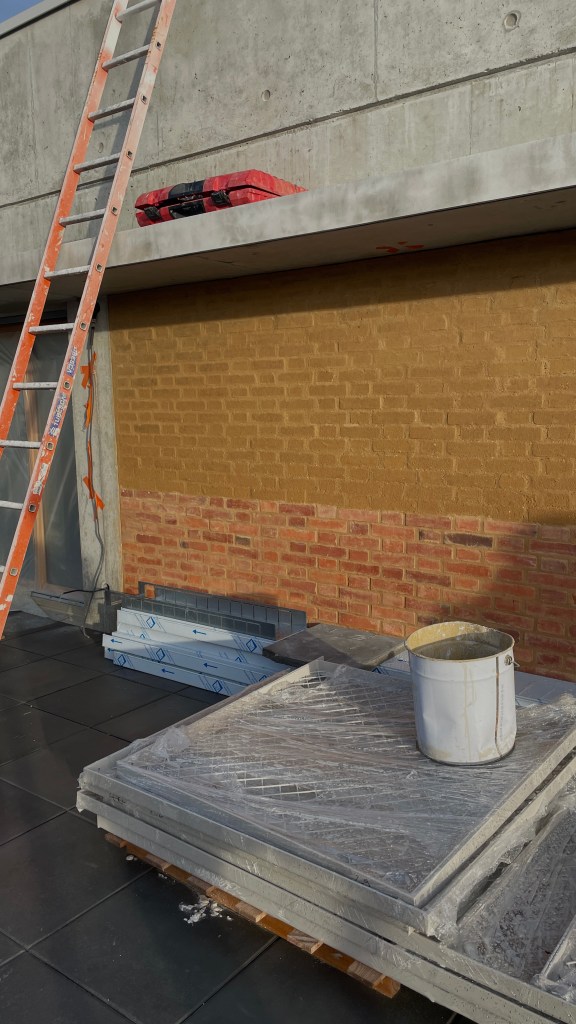
Picture of the wall
Social housing from rammed earth panels I Déchelette Architecture
After the housing development visit, we drove back to central Paris to visit the third pioneering building – a social house. A representative of the architectural firm Déchelette Architecture presented the use of rammed earth panels on the façade. As part of the competition, a 4-storey timber-framed building was to be designed on the site, using a maximum amount of biogenic materials. It was also important that the building complied with HQE certification. Déchelette Architecture worked with the environmental engineering firm AXOE. The aim was to provide a building with 8 apartments, a caretaker’s residence and a shop on the ground floor. The concept for the building’s exterior was to demonstrate the use of rammed earth panels on the façade.
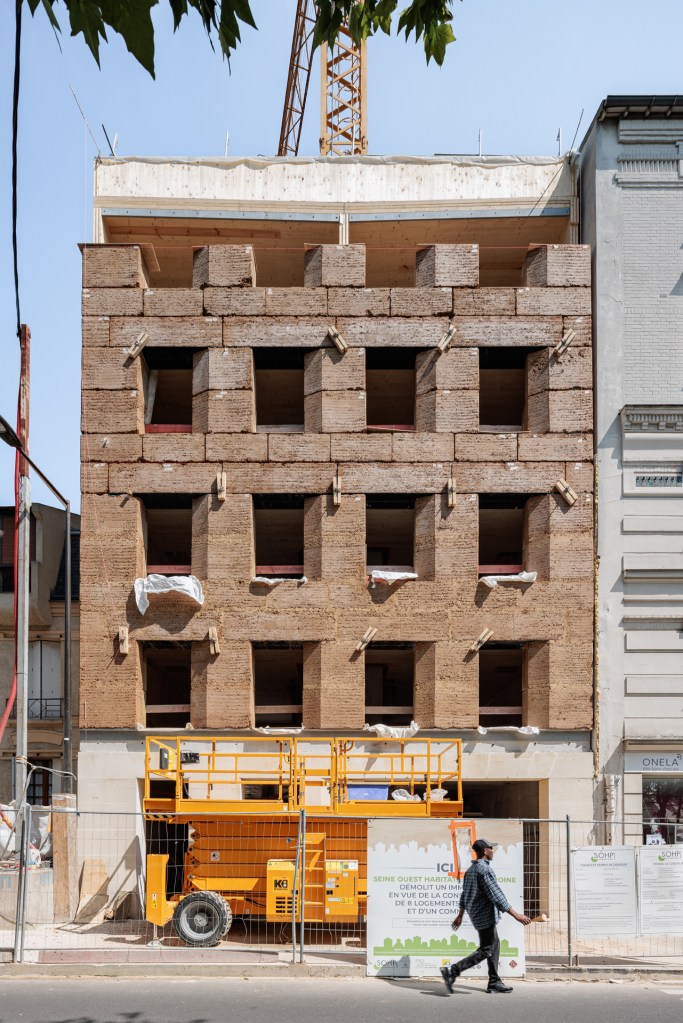

Pictures of the building
The rammed earth technique has been used in various parts of the world for thousands of years and is still used today as a sustainable and cost-effective construction method. In the case of the social house, the rammed earth panels were prefabricated in a factory, left to dry for at least a month and then brought to the construction site. The panels were 40 cm thick and consisted mainly of clay, sand and water. As the rammed earth panels did not contain lime, they were not waterproof. The presence of lime makes it impossible to reuse the clay. According to the architect, clay is a very good humidity regulator in rainy weather. The rain does dampen the wall, but the 40 cm wall is so thick that the moisture cannot reach the insulation and dries itself out. Behind the 40 cm clay panel there was 14 cm of mineral wool, a metal frame and a vapour barrier on top of that. In this case, this kind of assembly might work in a Parisian climate, but in Estonia we also have to take freezing temperatures into account, so in our case the moisture in the panel and freezing would break the rammed earth panel.

Source: https://www.dechelette-architecture.com/quatre-cheminees/
Cycle Terre the largest raw clay brick factory in the world
We finished the day at Cycle Terre’s largest raw clay brick factory. Cycle Terre has been fulfilling customers’ orders for 2 years, but the preparatory work for setting up the factory was very long and involved four years of research. The plant specialises in the production of pressed clay blocks, often called BTC, or screened clay, which is very lightly wetted and then pressed together firmly. After pressing, the blocks are stored and left to dry for one to three weeks. They are then ready for the construction of all types of vertical walls.
The factory’s working process involves excavating the clay from where there are plans for the next building. They never excavate further than 25 km from the factory and never transport bricks further than 150 km. After extraction, they bring the raw material to the factory to make bricks. They have developed special machinery for production. Water, sand and clay are sorted separately. They then pour the ingredients into a machine that squeezes out the beautiful raw clay bricks. A special machine also sorts out the fractured bricks. The proper bricks are then dried by ventilation. <for brick production they use rain water, which they collect from the roof of the factory building. They have 20-litre water tanks, which fill up in a 30-minute rain and are sufficient for up to two months of brick production. The price of raw bricks is equivalent to that of ordinary bricks.
Their factory is mobile, which means it is built on city land, with funding from the city and investors. The manufacturers only rent the building. This system allows the factory to easily move to different parts of the city if they don’t have building sites to mine the material anymore. Because of the transport limit, they also want to open more factories in the south of France.
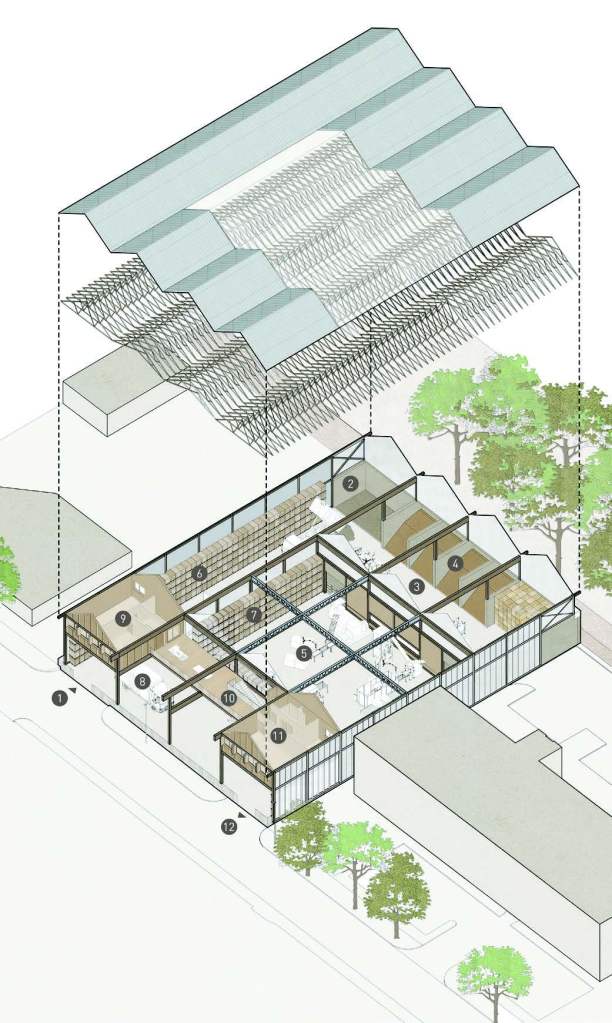
Source: https://www.cycle-terre.eu/mise-en-oeuvre/la-production/
All in all, it was a very productive trip to France to see different uses of clay. It confirmed that clay and straw go hand in hand. In our project we are exploring straw as an insulating material, but in order to achieve the most ecological building method possible, we also need to integrate clay as a façade material, for example. Thanks to the Centre for Estonian Architecture for organising this exciting trip! Maybe next time we can take a straw material tour? 🙂
If you have any more questions about clay, please contact us!
Estonian
Materjalide väärindamise kiirreis Pariis
Põhust moodulmajade projekteerimine ja ehitamine ei saa piirduda vaid põhu uurimisega. Et teada saada kuidas ehitada ökoloogiliselt ja biogeensetest materjalidest on kasulik vaadata ka Eestist väljaspoole. Seepärast võtsime pimedal novembrikuul osa savi ringväärindamise kiirreisist Pariisi, mida korraldas Eesti Arhitektuurikeskus. Reisi fookuses oli savi uurimine ning kuidas seda materjali ringväärindada. Külastasime Pariisis kolme ehitusobjekti ja toorsavitelliste tootmistehast. Päevad olid pikad ja intensiivsed, kuid väga huvitavad.
Prantsusmaa on oma projektide lähenemise ja seadusandlusega meie uuringutes väga oluline näide. Teadaolevalt on ka Prantsusmaal Euroopa kõige vanem põhust maja Maison Feuillette, mis valmis 1920. aastal. Siiani on Prantsusmaal põhust ehitamine palju tavapärasem kui meil. Samas ei ole neil laialdasi kogemusi puidust ehitamisega. Tänapäeval eelistavad nad uute CO2 regulatsioonide tõttu ehitusmaterjalidena savi, põhku ja puitu.
1.PÄEV
Meediaraamatukogu Pariisis I Philippe Madec
Neljapäeva lõunal maandusime Pariisis ja suundusime kohe külastama esimest objekti. Selleks oli arhitekt Philippe Madec’i poolt projekteeritud meediaraamatukogu Pariisis. Arhitekt väidab, et see projekt on manifest keskkonnatundlikust pioneerist ja detoksifeeriva betooni pooldamisest. Eesmärk on prijektiga näidata, et ei ole vaja hävitada ja uuesti ehitada, vaid linn saab uueneda ka vanu hooneid säilitades. Projekti idee oli säilitada võimalikult palju materjale ilma betooni kasutamata, paigaldada vähese keskkonnamõjuga päikesekaitse (ehk puidust sõrestik), loomulik ventilatsioon ning kasutada savipaneele. Külastuse eesmärk oli kuulda arhitekt Nicolas Miessneri kogemust valusavi paneelide ehitustehnoloogiaga kokkupuutest.
Pilt hoonest
(vahemõte) Huvitav oli teada saada, et Pariisi tehakse palju koostööd erinevate arhitektide vahel. Näiteks meediakeskuse projekti puhul oli Madec küll projekti arhitekt aga Miessner’i arhitektuuribüroo vastutas savi eest, sest nende peaarhitekt on teinud palju uurimusi savi kasutamise ja retseptide osas. Eestlasele on omapärane ikka kõike ise teha ja oma “konkurendiga” võimalikult vähe infot vahetada. Kuid süsinikureostuse vähendamisega on vaja ehitada keskkonnasõbralikumalt, mis tahini uute ehitusmaterjalide kasutamist. Et üleminek oleks valutum, siis ei pea üks arhitektuuribüroo kõike ise tegema. Oluliselt asjalikum tulemus saavutatakse kui kaastakse erinevaid arhitektuuribüroosid, kes on just spetsialiseerunud erinevatele eesmärkidele.
Nicolas Miessner I Toores maa
Nicolas Miessner on arhitekt, kes on spetsialiseerunud toormulla (inglise k. raw earth) kasutamisele. Tema teadmisi selle materjali kohta kinnitab magistrikraad toormulla uuringutes, samuti veetis praktikandina aega Auroville’i instituudis Indias ja osales ka muldkeha valamise koolitusel. Meediakeskuse jaoks töötas ta välja koos savitelliste tehasega spetsiaalse savisegu (sisaldab kruusa, toormulda, vett ja põhku), mida valatakse raketisse nagu betooni. Eesmärk oli leida kõige kiiremini tahenev segumass. Multimeedia raamatukogu valatud toorsavist seinad koosnevad 28% savist, 71% täitematerjalidest ja 1% põhust. Vesi moodustab 15% märjast massist. Keskmiselt vastab üks valatud savipaneel 1.3 kuupmeetrile ehk 2.1 tonnile, mille tihedus on 1600 kg/m3. Need savipaneelid ei ole aga konstruktiivse ning seepärast kasutati neid hoopis puitkarkassi täitematerjalina siseruumides, et reguleerida hoones soojust ja niiskust.

Pilt savibetooni valamisest ja viimistletud savipaneelist
Enne ehitise üleandmist viiakse läbi savipaneelide viimistlusetapp, et korvata ehitusplatsil tekkinud kahjustused ja tasandada seinapind niiske käsnaga. Kõik horisontaalsed ja vertikaalsed õõnsad ühendused puitkarkassi ja seinte ning kahe erineva seina vahel töödeldakse korgiplaadi või vedelate korgiinjektsioonidega. Pinna kõvendamiseks ja kriidistumise vältimiseks võib kasutada pinnakinnitajat, näiteks tselluloosliimi, kaseiini või vaha. Pärast hoone üleandmist antakse kliendile kaasa hooldusvihik. Iga savisegu kogus tehakse kättesaadavaks ehitusjärgsete järeltööde teostamiseks.
1+X tutvustus
Pärast kahetunnist meediakeskuse külastust viisime kohvrid hotelli ning tegime mõnusa lõunasöögi. Reisi seltskond oli väga huvitav ja kirju. Tuttavaid nägusid oli ministeeriumist, linnavalitsusest ning ka palju asjalikke Eesti arhitekte, kes tundsid huvi, kuidas mujal maailmas ehitatakse. Väga hea meel oli näha, et biogeensetest materjalidest ehitamine pakub huvi kõigile. Saime tutvustada ka 1+X uurimisrühma ning rääkida sellest, mida me teeme ning mis on meie eesmärk. Meie jaoks oli see väga oluline teadvustamisetöö nii ametnikele kui ka arhitektidele.

Pilt minu esitlus saatkonnas
2.PÄEV
Kortermajade arendus I Les Grands Moyens
Reisi teist päeva alustamine varajase väljasõiduga kortermaja ehitusplatsile (aadress 6 Rue Romain Rolland, 92220 Bagneux). Arhitektuuribüroo Les Grands Moyens esindaja tutvustas toorsavitelliste kasutamist siseseintes ja fassaadil. Jällegi oli Les Grands Moyens ainult savitelliste arhitektid, kes vastutasid fassaadi eest, ja teine arhitektuuribüroo teostas projekti ja hoone visiooni. Sellelt väljasõidult saime teada paar olulist asja. Nimelt Pariisis on olemas uurimiskeskus Centre Technique De Matériaux Naturels De Construction (eesti k. Looduslike ehitusmaterjalide keskus), kellega koostöös arhitektid saavad välja töötada ja sertifitseerida uusi looduslikke ehitusmaterjale. Lisaks on Pariisis RE2020 regulatsioon, mis nõuab, et 20-30% arendatavatest projektides oleks kasutatud ökoloogilisi materjale. See oli ka nõue, miks teine arhitektuuribüroo palus Les Grands Moyens’il projekteerida savitellistest fassaad.
Pilt majast
(vahemärkus) Bagneux piirkonnas Pariisi külje all on hetkel väga palju uusi arendusi. Ehitamise tingimuseks on aga see, et arendajad vastaksid projektide puhul RE2020 nõuetele. Samas kuulsime aga, et on ka arendusi, mille puhul kaetakse betoonhooneid “naturaalsete materjalidega”, mis tegelikult on ainult imitatsioon ökoloogilisest ehitusest.
Antud kortermajas kasutati toorsavitelliseid ainult fassaadimaterjalina ning lisaks eksponeeriti neid osati siseruumides. Antud projekt oli ühtaegu katse ja demonstratsioon näitamaks, et toorsavitellised on arvestatav ehitusmaterjal. Kuna tegemist on toorsaviga, mis tähendab, et telliseid ei ole põletatud, siis ei ole need täielikult ilmastikukindlad ning vajavad kaitset. Hoone viimasel korruse lõunapoolsel terrassil tuli seetõttu kasutada segu põletatud ja toorsavitellistest, sest arhitektid projekteerisid antud seina liiga lühikese räästa.

Pilt seinast
Tampsavi paneelidest sotsiaalmaja I Déchelette Architecture
Peale kortermaja visiiti sõitsime tagasi Pariisi kesklinna, et külastada kolmandat teerajajat hoonet – sotsiaalmaja. Déchelette Architecture arhitektuuribüroo esindaja tutvustas tampsavi paneelide kasutamist välisfassaadis. Konkursi raames pidi krundile projekteerima 4-korruselise puitkonstruktsioonist hoone, kus kasutatakse maksimaalselt biogeenseid materjale. Oluline oli, et hoonet vastaks ka HQE-sertifikaadile. Arhitektuuribüroo Déchelette Architectur tegi koostööd keskkonnainseneride firma AXOEga. Eesmärk oli pakkuda hoone, kus asuks 8 korterit, majahoidja elamu ja esimesel korrusel kauplus. Hoone eksterjööri kontseptsiooniks oli demonstreerida tänavapoolses fassaadis tampsavi paneele.


Pildid hoonest
Tampsavi tehnikat on erinevates maailma paikades kasutatud tuhandeid aastaid ja see leiab kasutust ka tänapäeval kui säästev ja kulutõhus ehitusmeetod. Sotsiaalmaja puhul oli tegu tampsavi paneelidega, mis olid tehases valmis toodetud, seal kuivanud vähemalt üks kuu ning alles seejärel toodud ehitusplatsile. Paneelid olid 40 cm paksused ning koosnesid peamiselt savist, liivast ja veest. Kuna tampsavi paneelid ei sisaldanud lupja, siis ei olnud nad veekindlad. Lubja sisaldus muudab savi mittetöödeldavaks. Arhitekti sõnul on savi vihmasaju korral väga hea niiskuse reguleerija. Vihm niisutab küll seina, kuid 40 cm sein on niivõrd paks, et niiskus ei jõua soojustuseni ja kuivab ise välja. 40 cm savipaneeli taga oli 14 cm mineraalvill, metallkarkass ja selle peal aurutõke, millele tuli peale viimistlus. Siinkohal selline sõlmelahendus võib töötada Pariisi kliimas, kuid Eestis peame arvestama ka külmumiskraadidega, seega meie puhul niiskus paneelis ja külmumine lööks tampsavi paneeli katki.
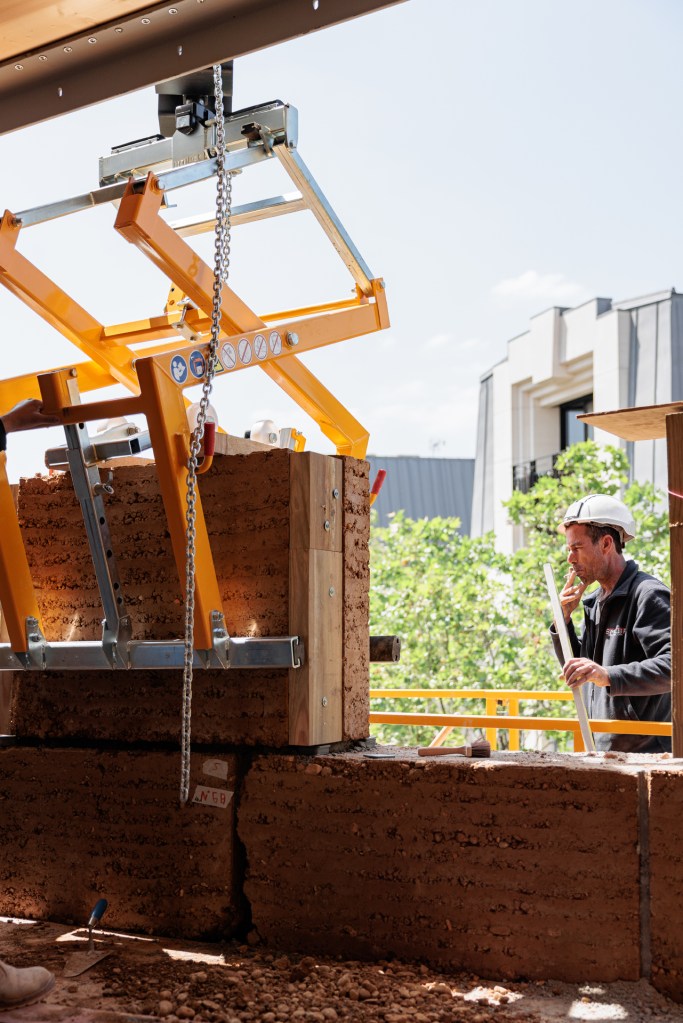
Foto allikas: https://www.dechelette-architecture.com/quatre-cheminees/
Cycle Terre suurim toorsavitelliste tootmistehas
Päeva lõpetasime Cycle Terre suurimas toorsavitelliste tootmistehases. Cycle Terre on juba 2 aastat täitnud klientide tellimusi, kuid eeltöö tehase loomiseks oli väga pikk, mis eeldas ka nelja aastast uurimistööd. Tehas on spetsialiseerunud pressitud saviploki tootmisele, mida sageli nimetatakse BTC-ks ehk sõelutud saviks, mis on väga kergelt niisutatud ja seejärel pressi abil tugevalt kokku surutud. Pärast pressimist plokid ladustatakse ja jäetakse kuivama üheks kuni kolmeks nädalaks. Seejärel on need valmis igat tüüpi vertikaalsete seinte ehitamiseks.
Tehase tööprotsess näeb ette, et savipinnast kaevandatakse sealt, kus on planerritud hakata ehitama mõnda järgmist hoonet. Nad ei kaevanda kunagi kaugemalt kui 25 km tehasest ja ei transpordi telliseid kaugemale kui 150 km. Pärast kaevandamist toovad nad toormaterjali tehasesse, et teha sellest telliseid. Nad on välja töötanud spetsiaalsed masinad tootmiseks. Eraldi sorteeritakse vett, liiva ja savi. Seejärel valavad nad koostisained masinasse, mis pressib välja kauneid toorsavitelliseid. Spetsiaalne masin sorteerib välja ka praaktelliseid. Seejärel kuivatatatakse korralikud tellised ventilatsiooni abil. Tootmiseks kasutatakse vihamvett, mida nad kogutakse tehasehoone katuselt. Neil on 20 liitrised veeanumad, mis täituvad 30 minutilise vihmasaju jooksul ja millest jagub kuni kahe kuu telliste tootmiseks. Toortellise hind on võrdväärne tavalise tellise hinnaga.
Nende tehas on mobiilne, mis tähendab, et see on ehitatud linna krundile, linna ja investorite rahastusega. Tootjad vaid rendivad hoonet. Selline süsteem võimaldab tehasel lihtsalt kolida erinevatesse linna osadesse, kui neil ei jagu ehitusplatse, kust materjali kaevandada. Transpordi limiidi tõttu soovivad nad avada veel tehaseid ka Prantsusmaa lõunapoolses osas.

Visuaali allikas: https://www.cycle-terre.eu/mise-en-oeuvre/la-production/
Kokkuvõtvalt oli savimaterjali ringväärvindmaise kiirereis Prantsusmaale väga asjalik. Saime kinnitust, et savi ja põhk käivad käsikäes. Oma projektis uurime põhku kui soojustusmaterjali, kuid võimalikult ökoloogilise ehitussõlme saavutamiseks peame integreerima ka savi kui näiteks fassaadimaterjalina. Täname omalt poolt Eesti Arhitektuurikeskust põneva reisi korraldamise eest! Äkki järgmine kord saame ette võtta põhu ringreisi? 🙂
Kui tekkis veel küsimusi savi kohta, siis võta meiega ühendust!
 1plussx