


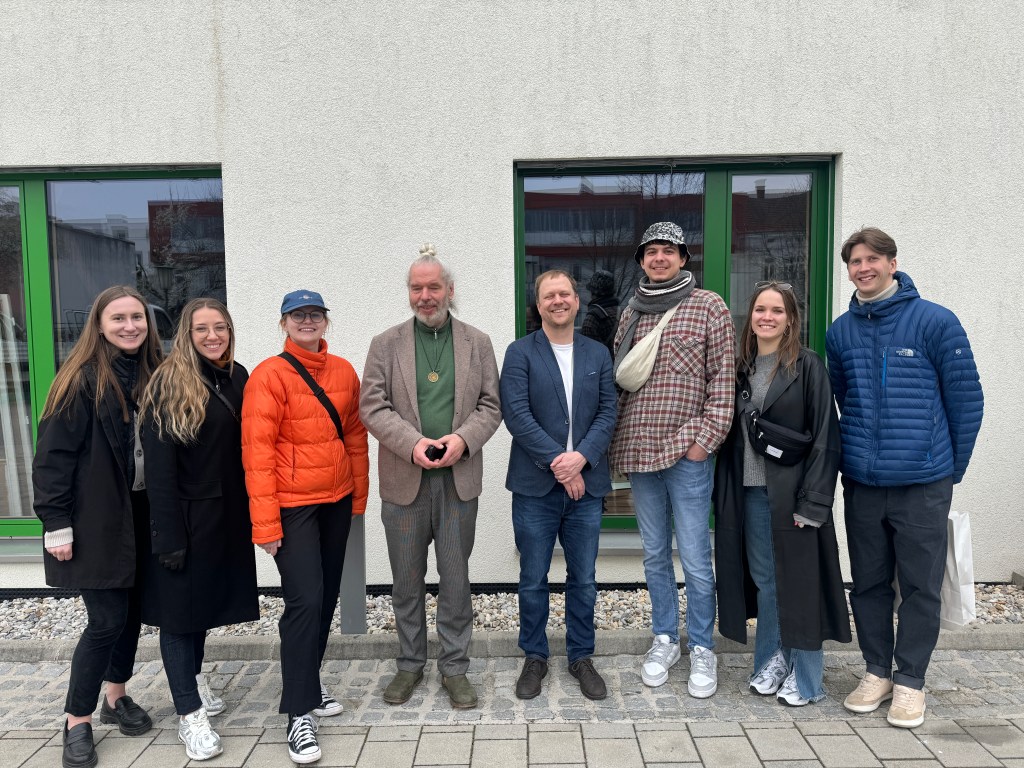
The cold Estonian weather led the 1+X team to welcome the early spring in sunny Vienna. The aim of the trip was to gather knowledge through practical examples and meetings with specialists that we could apply to our own development work.
MONDAY
Architects Querkraft
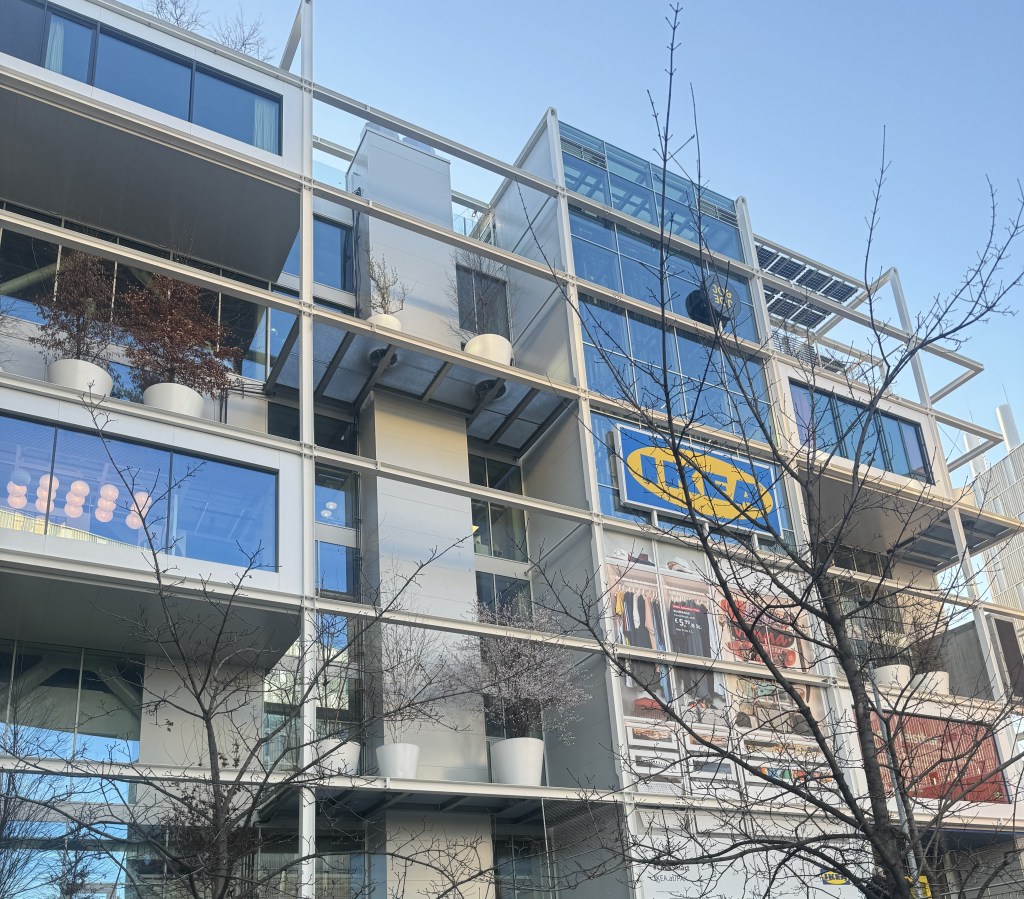
The first stop was the Ikea Westbahnhof, a modular building by architects Querkraft that houses an Ikea store, hostel and public roof terrace. This Ikea is one of the few stores of its kind without parking spaces and it is clear that the store was very popular, visitors to the store make a conscious choice to move to an eco-friendly in-town store rather than to a car-driven Ikea on the outskirts of the city. This site is a good example of how to build sustainably – with large pots of greenery planted on both the façade and terraces of the building help to moderate the temperature in the city. The structure itself is built on steel beams, with prefabricated modules and elements slid between them. Vertical movement and balconies are placed between 4.5 m steel beams, which act as shelves in the urban landscape.
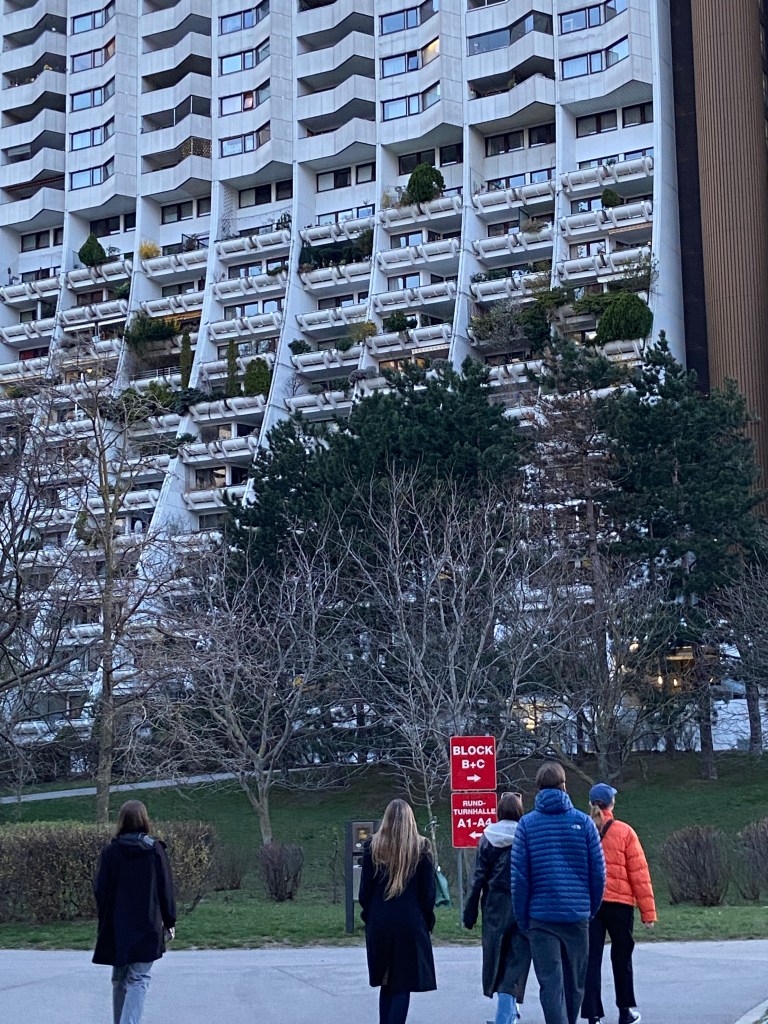
Architects Harry Glück, Kurt Hlaweniczka, Thomas Reinthaller and Franz Requa
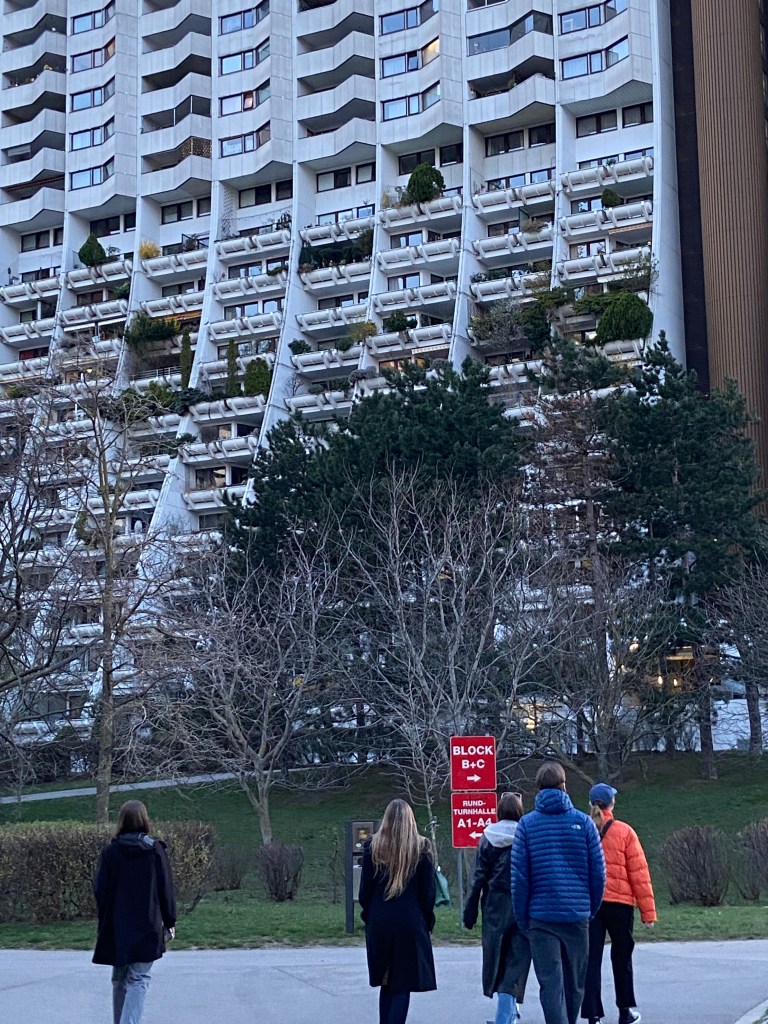
For our next site, we took the metro to Alt-Erlaa on the outskirts of Vienna to see a striking example of modernism in a well-functioning residential complex built in the 1980s. Such a complex can be considered a mini city with about 10 000 inhabitants, with living units, public functions – schools, church, dining, library, gym, spa complexes, kindergartens, etc. The complex offers many opportunities for leisure and it was pleasant to walk between the houses, which served as a park. We also chatted to a local resident who has rented an apartment there for 40 years. Interestingly, there are only rental apartments in the complex. According to the local, there is a long queue to get an apartment, sometimes as long as 3 years, and it is very popular with families with children. In our own project, we saw how it is also possible to design such large and high volumes in a grid, with fixed modules and elements.
TUESDAY

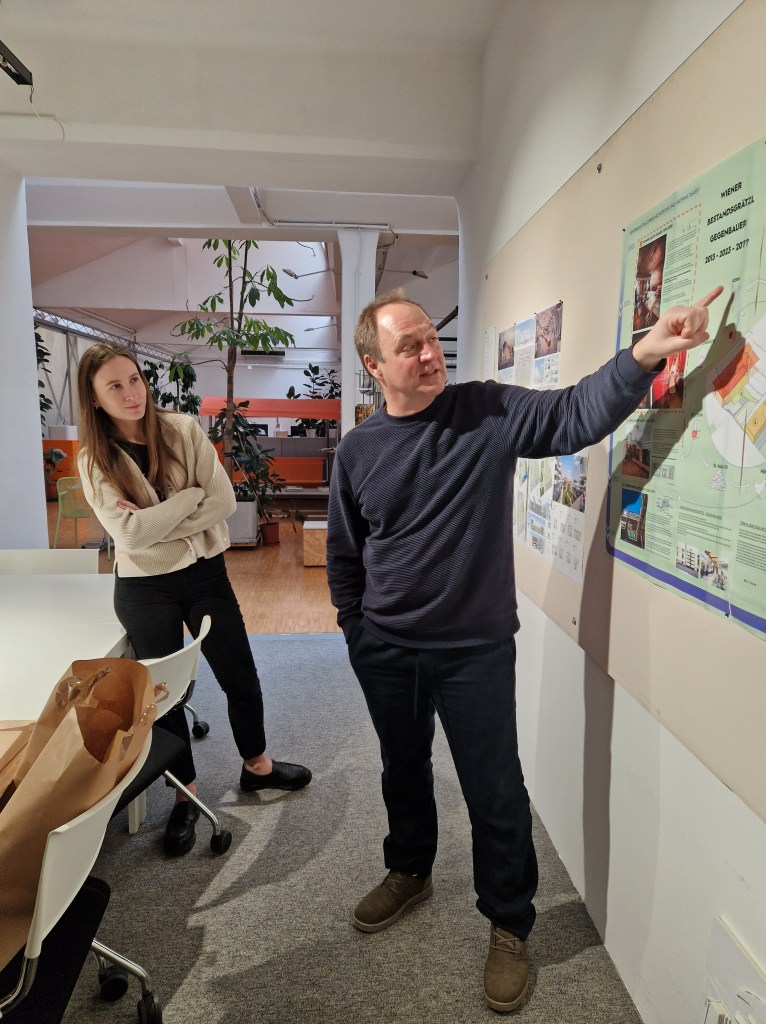
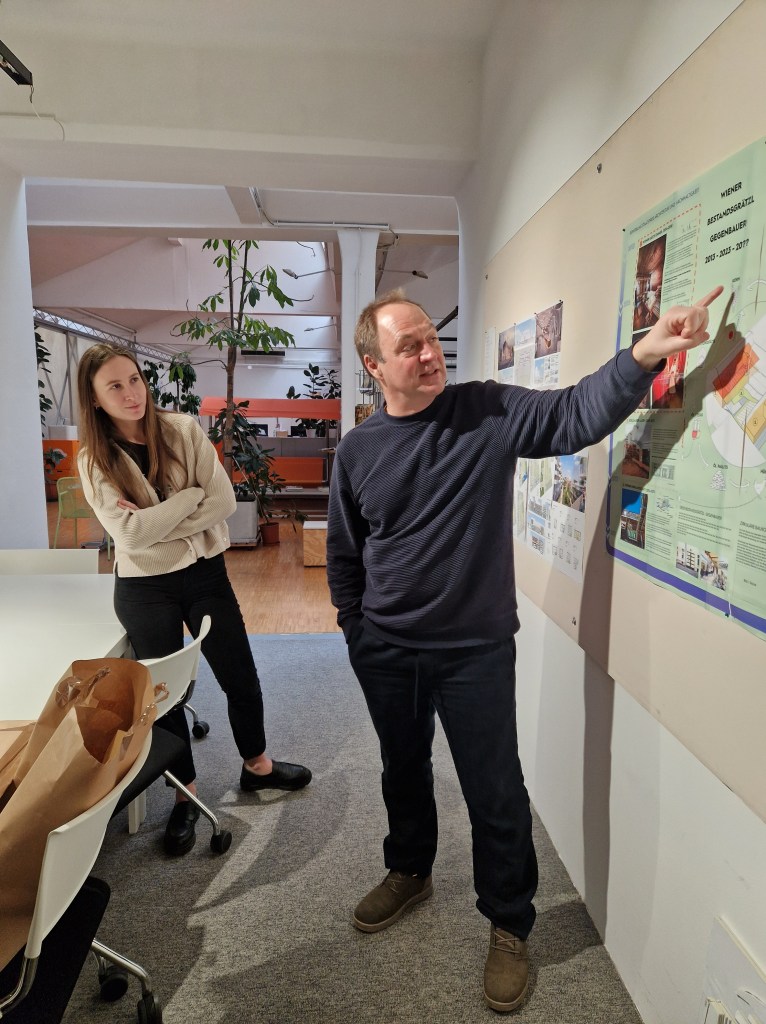
Heri&Salli studio warmly welcomed us to share their experience and approach to both the straw concept and modular construction. The studio itself has been operating since 2004 and their approach to architecture is very human and material centric. Josef Saller, one of the directors of the office, presented a project commissioned by a long-standing client of theirs, who wanted to create a range of abstract spaces with a strong emphasis on ecology, reuse and community. We were specifically interested in the straw room they created, which is how we found their studio. This project had similar problems that we also face – fire safety regulations. In the end, approval was obtained because the rooms were built into an existing structure and the straw walls themselves did not act as a fire compartment. The base itself was visible but covered with rebars, which was coincidentally located in the plot. Heating pipes and electrical wiring were integrated between the rebars and the straw. This combination created a new aesthetic.

Architects Heri&Salli studio
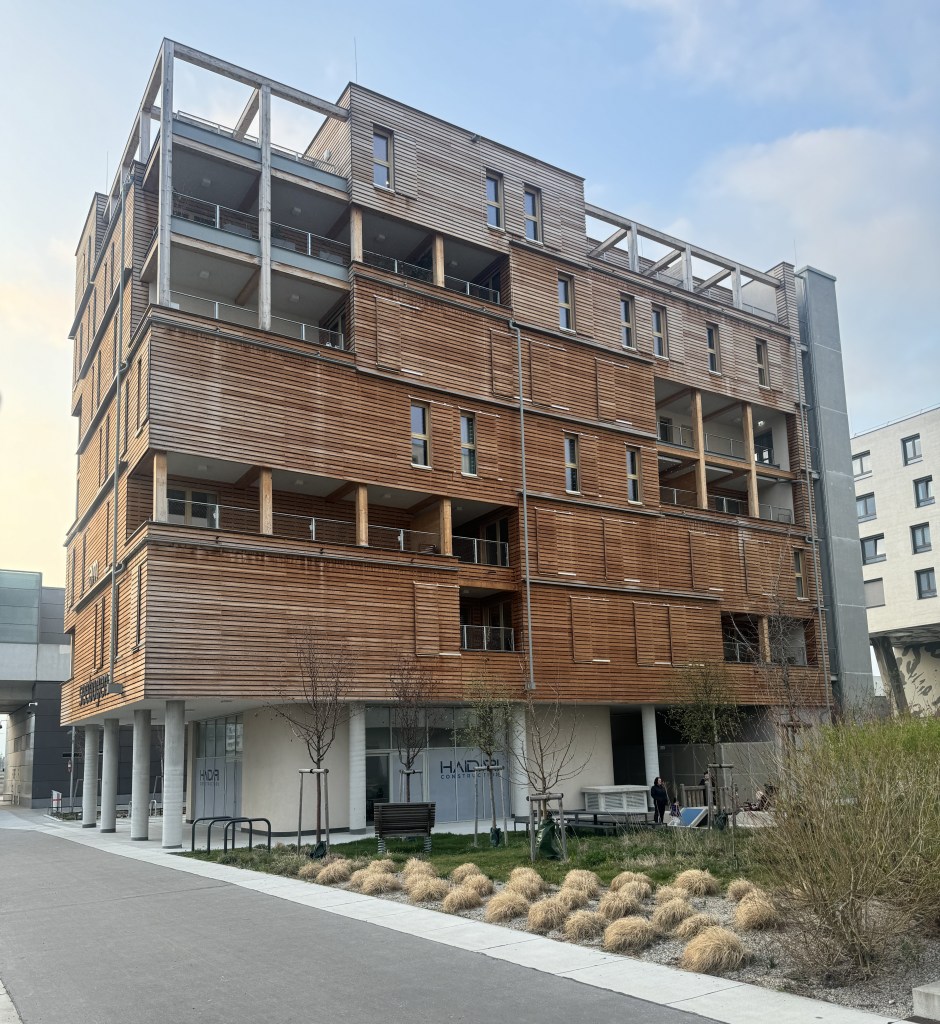
The Forum am Seebogen is a building completed in 2022 in the Seestadt Aspern district, currently an emerging area for new office and residential buildings. The building was designed with a load-bearing frame and modules, but the reality was that the modules had to be disassembled into elements. The project was the winning entry in the competition, and the terms of reference already stipulated that the building components had to be prefabricated in the factory, with a construction time limited to six months. The proportion of living space had to be a maximum of 80%, as the building had to integrate office space as well as a forum with a public function.
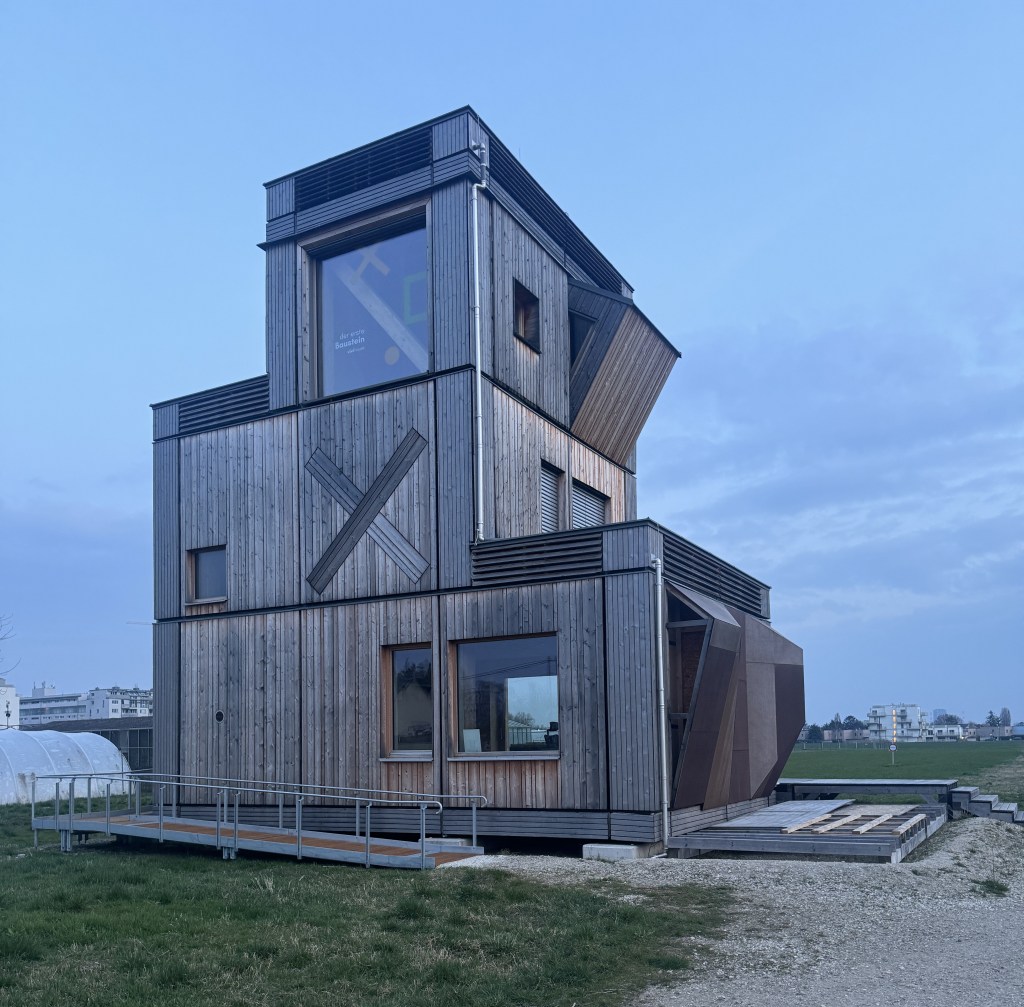
Architects Paul Adrian Schulz and Nikolas Kichler, Prof. Karin Stieldorf
The Vivihouse is a practical example that is closest to the 1+X system and concept, precisely because of its modular system and use of materials. This system can grow from a small building of a few tens of square meters in a rural area up to six-storey buildings in urban environments, simultaneously applying principles of energy efficiency, affordability, reconfiguration. There is also a strong emphasis on community and community gathering to self-building with the Vivihouse system. The structural component of the system is a timber frame that can be filled with different facade elements as needed.
WEDNESDAY

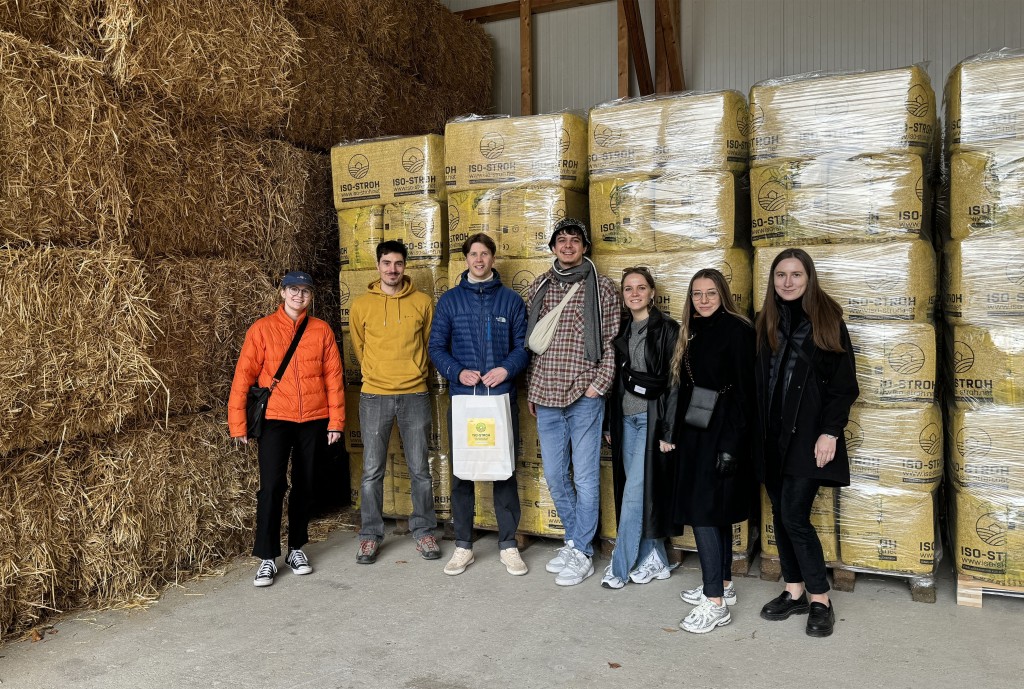
The last full day in Austria took us out of Vienna to the Iso Stroh factory, which specialises in the production of blowed-in straw. The company is also home to architects and engineers who provide building solutions using their own factory’s blowed-in straw as insulation material. We were also taken to a demonstration building built with two modules, using timber as a structural element. The blowed-in straw can be used either on site or in prefabricated panels. A 110 mm pipe is placed between the structure and starts to blow the straw, to which no other materials are added. We also saw the production chain for ourselves – it starts with the cleaning of the straw, where dust and other debris is removed, leaving 5-30 mm of crushed and cleaned straw. The dust is compressed into chunks which are sent back to the field to improve the soil structure. The cleaned straw cuttings are then transported to a hopper where they are blown directly between the panels, or to a packing plant made from recycled plastic. The weight of one package is 18 kg. The visit to Iso Stroh inspired us to use blowed-in straw as an insulation material for our own project, because the straw is cleaned of dust, which means that the end product is a better solution for allergy sufferers; the quality of the straw can be guaranteed with factory-produced material, and it is also a faster solution compared to straw packs.


Architects Erwin Schwarzmüller
The last site visit was also out of Vienna to the Gesa House of Learning in St. Pölten, completed in 2018, which offers the opportunity to provide jobs for long-term unemployed people and also teach them a range of practical skills. The building has an area of around 1200 m2 and includes workshops, office, seminar, social and consulting rooms. The building is constructed from 90% ecological renewable materials and there is a strong emphasis on overall sustainability and carbon footprint. CLT timber was used as the structural material, with insulation in the form of base boards covered with clay or wood shake on the interior and lime mortar on the exterior. The building was also designed with a green roof to compensate for the removal of a few trees from the site due to the construction of the building.
The trip provided us with good contacts with professionals in the field with whom we will keep in touch in the future. The outing reaffirmed to us that we are dealing with an important issue that is also topical elsewhere in Europe.
Estonian
Viini külastus
Eesti külmad ilmad juhtisid 1+X tiimi varajast kevadet vastu võtma päikselises Viinis. Reisi eesmärk oli koguda teadmisi läbi praktiliste näidete ja spetsialistidega kohtumiste, mida saaksime rakendada ka enda arendustöö puhul.
ESMASPÄEV

Arhitektid Querkraft
Esimene peatus oli Ikea Westbahnhof modulaarne ehitis Querkraft arhitektide poolt, milles paikneb Ikea pood, hostel ning avalik katuseterrass. Antud Ikea on üks väheseid omataolisi poode, kus puuduvad parkimiskohad ning on näha, et pood oli väga populaarne ehk poe külastajad teevad teadlikult valiku liikuda pigem keskkonnasõbralikku linnasisesesse poodi versus autoga linna äärsesse Ikeasse. Antud objekt on hea näide, kuidas ehitada jätkusuutlikult – nii hoone fassaadile kui ka terrassidele on istutatud suurtesse pottidesse rohelust, mis aitab maandada temperatuuri linnas. Konstruktsioon ise on terastaladel, mille vahele on nö libistatud tehases eeltoodetud moodulid ja elemendid. Vertikaalne liikumine ja rõdud on paigutatud 4.5 m terastalade vahele, mis linnapildis mõjuvad justkui riiulitena.
Arhitektid Harry Glück, Kurt Hlaweniczka, Thomas Reinthaller and Franz Requa
Järgmise objekti jaoks sõitsime metrooga Viini äärelinna Alt-Erlaasse, et näha silmapaistvat modernsimi näidet hästi toimivast elukompleksist, mis võeti kasutusele 1980ndatel. Taolist kompleksi saab pidada mini linnaks koos ca 10 000 elanikuga, kus on nii elukohad, avalikud funktsioonid – kool, kirik, söögikohad, spa kompleksid, lasteaiad jne. Kompleks pakub palju võimalusi vaba aja veetmiseks ning mõnus oli jalutada majade vahel, mis kandis pargi funktsiooni. Sattusime jutustama ka kohaliku elanikuga, kes on üürinud korterit seal 40 aastat. Huvitav on see, et kompleksis on ainult rendikorterid. Kohaliku sõnul on seal pikk järjekord, et korterit üldse saada, vahepeal lausa 3 aastat ning see on väga populaarne just lastega peredele. Oma projekti raames nägime, kuidas ka nii suuri ja kõrgeid mahte on samuti võimalik projekteerida gridis, kus tekivad kindlad moodulid ja elemendid.
TEISIPÄEV

Heri&Salli stuudio võttis meid soojalt vastu, et jagada oma kogemusi ja lähenemist nii põhu käsitlusel kui ka modulaarse ehitusega. Büroo ise on juba toiminud aastast 2004 ning nende lähenemine arhitektuurile toimub väga inimese ja materjali keskselt. Josef Saller, kes on büroo üks juhtidest, tutvustas projekti, kus tellijaks on nende pikaajaline klient, kelle sooviks oli luua erinevaid abstraktseid ruume, milles oli palju rõhutud ökoloogilisusele, taaskasutusele, kommuunile. Meid spetsiifiliselt huvitas just nende loodud põhuruum, mille kaudu me ka nende stuudio leidsime. Selle projekti puhul olid sarnased probleemid, millega ka meie silmitsi seisame – tuleohutuse regulatsioonid. Lõplikult saadi kooskõlastus tänu sellele, et ruumid olid olemasoleva konstruktsiooni sisse ehitatud ning põhuseinad ise ei toiminud tuletõkkesektsioonina. Põhk ise oli nähtav kuid kaetud sarrustega, mis oli juhuslikult asukohas ülejäänud. Sarruse ja põhu vahele oli integreeritud küttetorud ja elektrijuhtmed. Taoline kombinatsioon tekitas uutmoodi esteetika.
Arhitektid Heri&Salli stuudio
Forum am Seebogen on 2022 aastal valminud hoone Seestadt Asperni linnaosas, mis on hetkel arenev piirkond uute büroo- ja eluhoonete poolest. Hoone on projekteeritud kandvast raamist ja moodulitest, kuid reaalsus oli see, et moodulid tuli lahti võtta just elementideks. Projekt oli võistluse võidutöö ning juba võistlusülesande tingimustes oli kirjas, et hooneosad peavad olemas suures osas tehases eeltoodetud ning ehitusaeg piiratud kuue kuuga. Eluruumide osakaal pidi olema maksimaalselt 80%, sest hoonesse oli vaja integreerida bürooruumid ning ka avaliku funktsiooniga foorum.

Arhitektid Paul Adrian Schulz ja Nikolas Kichler, prof. Karin Stieldorf
Vivihouse on praktiline näide, mis on 1+X süsteemi ja kontseptsiooniga kõige lähedasem just oma modulaarse süsteemi ja materjali kasutuse poolest. Antud süsteem saab kasvada väikesest paarikümne ruutmeetrisest hoonest maapiirkonnas kuni kuue korruseliste hooneteni linna keskkondades, samaaegselt rakendades energiatõhususe, taskukohasuse, ümberkonfigureerimise printsiipe. Palju on rõhutud ka kommuunile ja kogukonna kokkutulemisele ehitadades ise endale hooneid Vivihouse süsteemi kaudu. Süsteemi konstruktiivseks osaks on puitkarkass, mida saab erinevate fassaadi elementidega vastavalt vajadusele täita.
KOLMAPÄEV

Viimane terve päev Austrias viis meid Viinist välja Iso Stroh tehasesse, mis on spetsialiseerunud puistepõhu tootmisele. Samuti on ettevõttes arhitektid ja insenerid, kes pakuvad ka hoonete lahendusi kasutades soojustusmaterjalina nende enda tehase puistepõhku. Meid juhatati ka näidishoonesse, mis on ehitatud kahe mooduli põhiselt ning konstruktiivse elemendina on kasutatud puitu. Puistepõhku saab kasutada nii ehitusplatsil kohapeal või juba eelnevalt tehases töödeldud paneelides. Konstruktsiooni vahele pannakse 110 mm toru, mis hakkab puhuma põhku, kuhu ei ole lisatud muid materjale juurde. Nägime ise ära ka tootmisketi – see algab esmalt põhu puhastamisega, kus tolm ja muu praht eemaldatakse ning järgi jääb 5-30 mm pikkusena purustatud ja puhastatud põhk. Tolm kompressitakse tükkideks, mis saadetakse tagasi põllule, et parandada mulla struktuuri. Puhastatud põhukõrred liiguvad edasi mahutisse, kust puhutakse see otse paneelide vahele või lähevad edasi pakendamisele, mis on toodetud taaskasutatud plastikust. Ühe paki raskus on 18 kg. Iso Strohi külastus andis meile inspiratsiooni kasutada ka enda projektis just puistepõhku soojustusmaterjalina, sest põhust puhastatakse välja tolm ehk lõpp produkt on allergikute jaoks parem lahendus, tehases toodetud materjaliga saab kindel olla põhu kvaliteedis, samuti on see ka kiirem lahendus võrreldes põhupakkidega.

Arhitektid Erwin Schwarzmüller
Viimane objekti külastus jäi samuti Viinist välja St Pölteni linna 2018. aastal valminud Gesa House of Learning hoonesse, mis pakub võimalust pikaajaliselt töötutel inimestel pakkuda töökohti ning ka õpetada neile erinevaid praktilisi oskusi. Hoone maht on ca 1200 m2 ning hõlmab endas töökodasid, büroo-, seminari-, sotsiaal- ja konsultatsiooniruume. Maja on ehitatud 90% ulatuses ökoloogilistest taastuvatest materjalidest ning on palju rõhutud üleüldiselt jätkusuutlikusele ja CO2 jalajäljele. Konstruktiivne materjal oli CLT puit, soojustusena kasutati põhupakke, mis kaeti siseruumis savikrohvi või puiduga ning välisruumis lubikrohviga. Hoonele kavandati ka rohekatus, et kompenseerida paari puu eemaldamine krundilt hoone ehituse tõttu.
Saime reisilt häid kontakte oma ala professionaalidega, kellega hoida sidemeid edaspidi. Väljasõit kinnitas meile uuesti, et tegeleme olulise teemaga, mis on aktuaalne ka mujal Euroopas.
Ja aitäh TARK reisidele OÜ, kes korraldasid nii toreda reisi.
 1plussx