

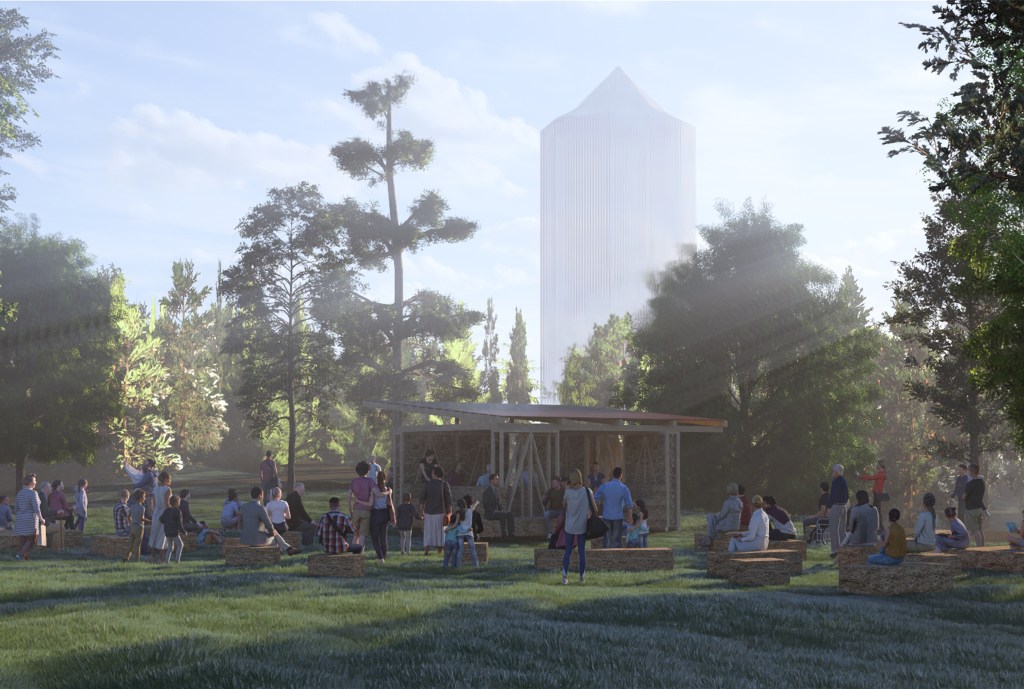

The 1+X team has a great opportunity to build a stage for the Opinion Festival where we can put our knowledge into practice. The idea of building something practical alongside the theoretical research was in the plan from the beginning, but in what form and where was the question. Work on the installation started at the beginning of the year to develop the form and find a location where to build it. We got in touch with the team at the Opinion Festival and found a common language.
Although the Opinion Festival takes place on the second weekend in August, we started work on the straw stage in mid-May. Sven Aluste helped us out, so we could build near Paide, so that the transport of the construction elements would be as close as possible to the construction site. As the installation consists of straw panels, we can prefabricate them earlier and assemble the elements on site. Similar logic as in our research. We started the construction in May because we wanted to test out exactly how much straw we could compress before making firm drawings, after which the panel dimensions would be in place.

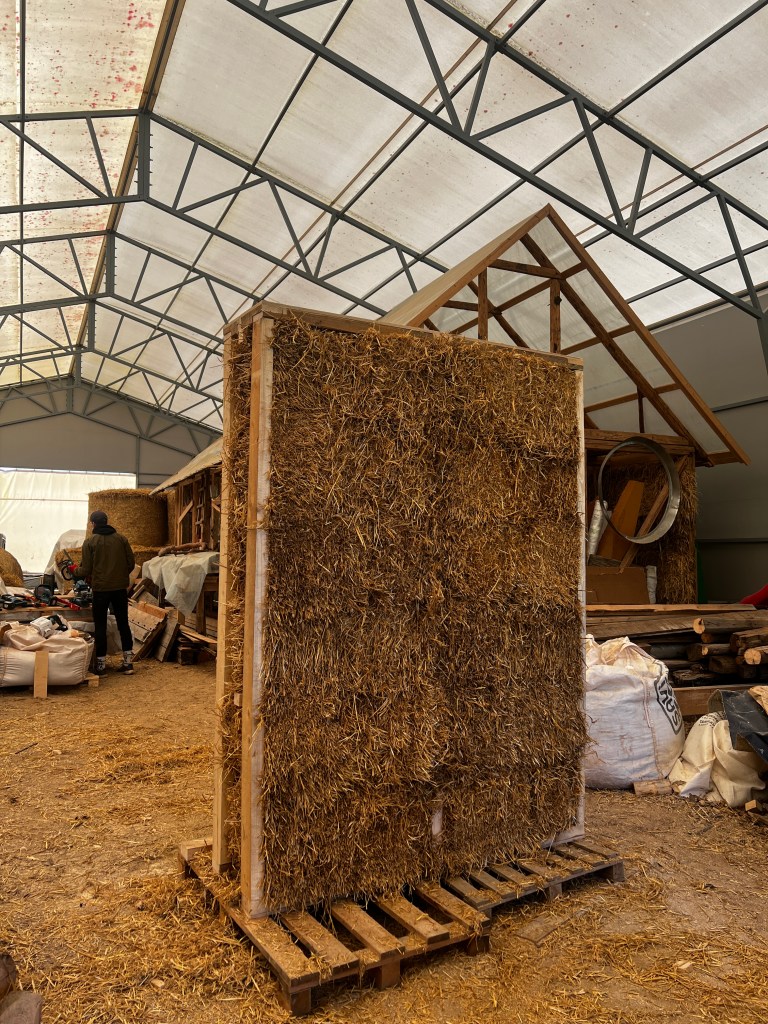
By the day of the first day of build, we transported 12 straw packs to the site and started building the first panel. As we were still learning how to build the panel more accurately, the first panel took a whole day to build, but we were prepared for that. First, we built the frame from wood, which is the load-bearing part. As always when experimenting, we came up with several modifications on how to build it better, and later we added joints to the frame to make the structure stronger. In addition to the woodworking, there was a lot of work on the straw bales. These had to be moulded more tightly and checked to make sure that the bales were more or less the same size. The straw bales in the first row could be slid between the frame without any additional work, but for the second row it was necessary to sink a binding wood into the bale. To do this, we had to cut a groove in the straw so that we could drown the wood into the straw bale. The third row was without a groove and the fourth with a groove, so the last two bottom rows were repeated.

The final step was the finishing, which was to cut off the excess straw that was left out of the frame, and the end result was a clean surface. 1 panel done, 7 more to go!
Põhupaneeli ehitus
1+X tiimil on suurepärane võimalus ehitada Arvamusfestivalile lava, kus saame oma teadmised rakendada praktiliselt. Idee, et ehitada valmis ka midagi praktilist teoreetilise uurimuse kõrvalt oli meil juba algusest plaanis, kuid mis kujul ja kuhu, see oli küsimus. Töö installatsiooni kallal algas juba aasta algusest, et töötada välja vorm ning leida ka asukoht, kuhu ehitada. Võtsime ühendust Arvamusfestivali meeskonnaga ning leidsime ühise keele.
Kuigi Arvamusfestival toimub augusti teisel nädalavahetusel, siis põhulava ehitustöödega alustasime mai keskpaigast. Selle osas tuli meile vastu Sven Aluste, kelle juures Paide lähistel saame ehitada, et ehituse jaoks vaja minevate elementide transport oleks ehitusplatsile võimalikult lähedal. Kuna installatsioon koosneb põhupaneelidest, siis saame need varasemalt valmis ehitada ning ehitusplatsil elemendid kokku panna. Sarnane loogika nagu ka meie uurimistöö puhul. Juba mais me alustasime ehitamisega selle tõttu, et enne kindlate jooniste tegemist saaksime läbi katsetada täpsemalt kui palju me saame põhku kokku pressida, peale mida on paneeli mõõdud paigas.

Ehituspäevaks transportisime 12 põhupakki kohale ning alustasime esimese paneeli ehitusega. Kuna me alles õppisime, kuidas täpsemalt põhupaneeli ehitada, siis esimene paneel võttis lausa terve päeva aega, kuid sellega olimegi arvestanud. Esmalt ehitasime valmis raami prussidest, mis on kandev osa. Nagu katsetades ikka, siis tekkis ka mitu muudatust, kuidas paremini ehitada ning hiljem tegime raamile juurde tappliited, et konstruktsioon oleks tugevam. Lisaks puidutööle oli palju tööd põhupakkidega. Need tuli vormida tihedamaks ning kontrollida, et pakid oleksid enam-vähem sarnastes mõõtudes. Esimese rea pakke sai ilma lisatöödeta raami vahele libistada, kuid teise rea jaoks oli vaja uputada põhu sisse siduv pruss. Selleks pidime põhu sisse saagima soone, et sinna saaks uputada prussi. Kolmas rida oli ilma sooneta ning neljas soonega, niimodi kordusid ka kaks viimast põhurida.

Viimane samm oli viimistlemine ehk lõikasime maha põhu ülejäägi, mis jäi välja raamist ning lõpptulemus oli ühtne põhupind. 1 paneel tehtud, 7 veel minna!

 1plussx