


The installation for Arvamusfestival offers different layers – opinion space, stage, pavilion, exhibition, school space. The layers themselves can also offer different variations, with different possibilities for the use of the stage as well as, for example, for school lessons. Varying functions will also invite different kinds of visitors. The installation is open on all sides, so that the space functions transparently, with people approaching the stage from the sides. The roofing material also encourages transparency to make the space as spacious and light-filled as possible. The space can be divided into several areas – a stage area, an audience area and also a 1+X exhibition area where the whole 15-month process is reflected through the exhibition. At the same time, these areas are connected through openness.
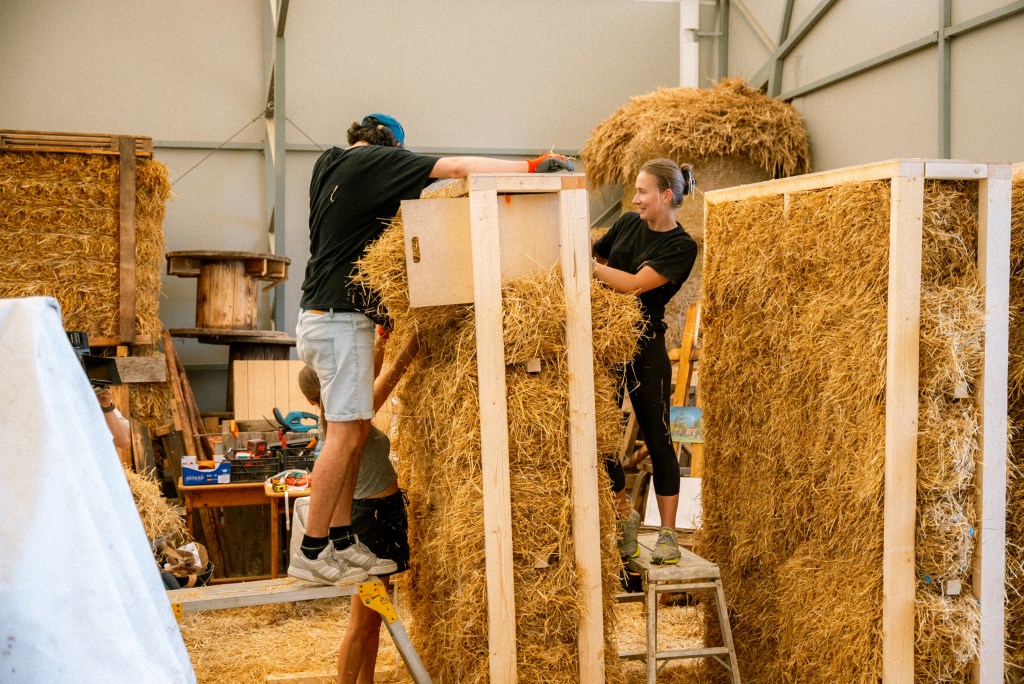
The construction of the panels, foundation, roof, transportation, lifting and fixing the panels to the foundations – these are the stages of the installation. Through all of the steps we got a lot of help from our mentor Sven ALuste. You can read more about the construction of the test panel in the previous blog post. The only thing that changed in the construction was the timber structure, where we still ended up not going ahead with the joint connection as it was no longer needed for the roof. In total, 8 panels had to be built, of which 6 were filled with straw and 2 with only the timber structure. With the test panel construction we completed one, with the natural building training we completed the second panel. The next six panels were no longer based on the centrality of the panel, but just on the tasks at hand. We started with the timber construction of all the panels, then filling in the straw, trimming the base walls and the final part was fixing the diagonals into the grooves made in the straw.
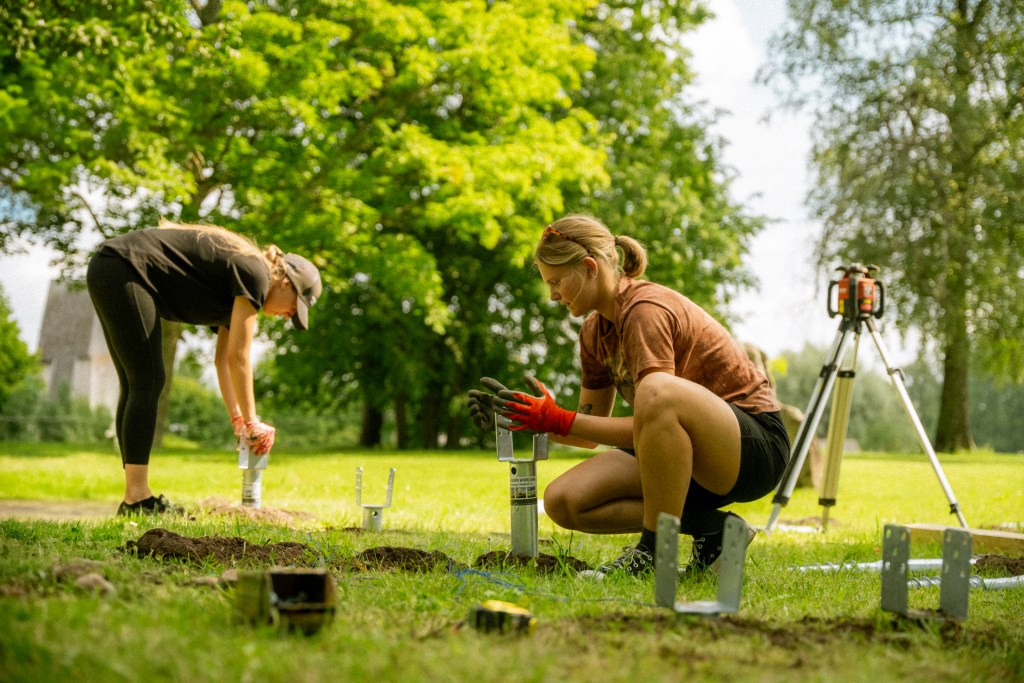
Foundation construction began first by measuring out the exact location, and once the location was in place, we began measuring out the contour of the installation. Two important tools in the foundation construction were a power drill and a laser level. The next step was screwing in the holes, which was quite a time-consuming job as the foundation still had to be properly leveled. For this, we had a levelling device to get the screwdriver to the same height. The screeds were then fitted with the brackets, which in turn we fitted the panels to the next day.
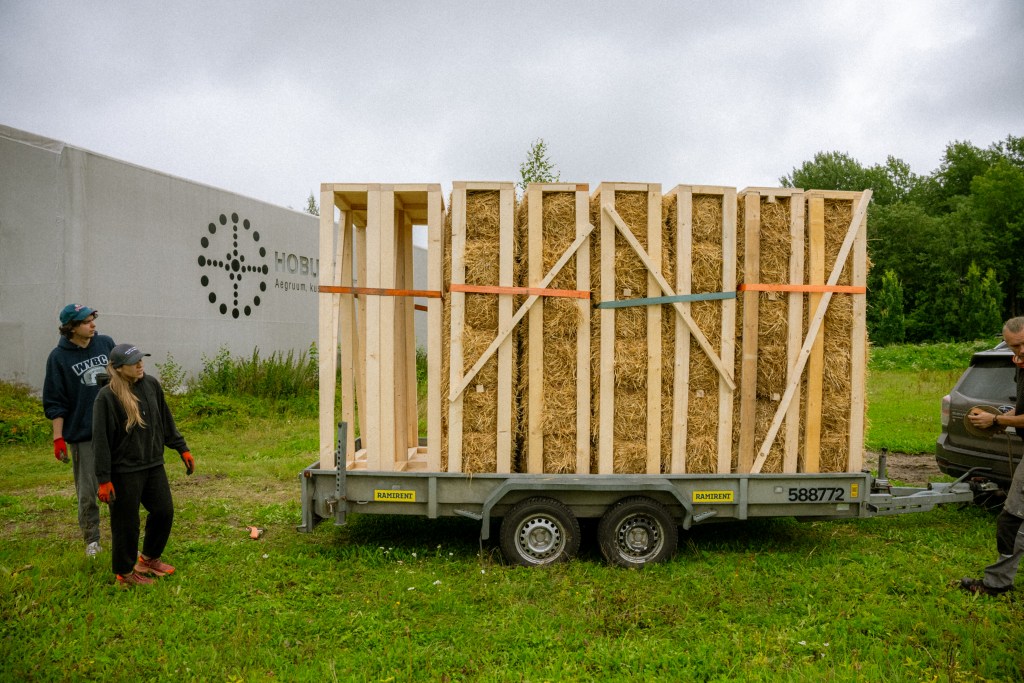
As the panels were built in the Horseshoe School Park, which is about a 15 minute drive from Paide, they had to be transported in a trolley. A forklift was waiting for us at the location to lift the panels onto the foundation.
One of the most challenging aspects of both the design and construction process was the roof. On the day of construction, however, it turned out that half the material was missing. Quickly, the whole day’s plan had to be changed, and first of all we had to quickly find suitable material from somewhere, for which we had to make an extra trip to Tallinn. Luckily, we had some friends with us, and with their help, we got a lot done. Cutting the wood and lifting and fixing the beams went quickly. Of course, there were also a few hiccups with the project, which we had to re-play on the spot. The roof pitch thus became much simpler and more logical than we had originally thought. We had a transparent trapezoidal profiled pvc tile for the roof. It was important to make sure that the overlaps between the pvc sheets were positioned correctly so that the rain would not come through.
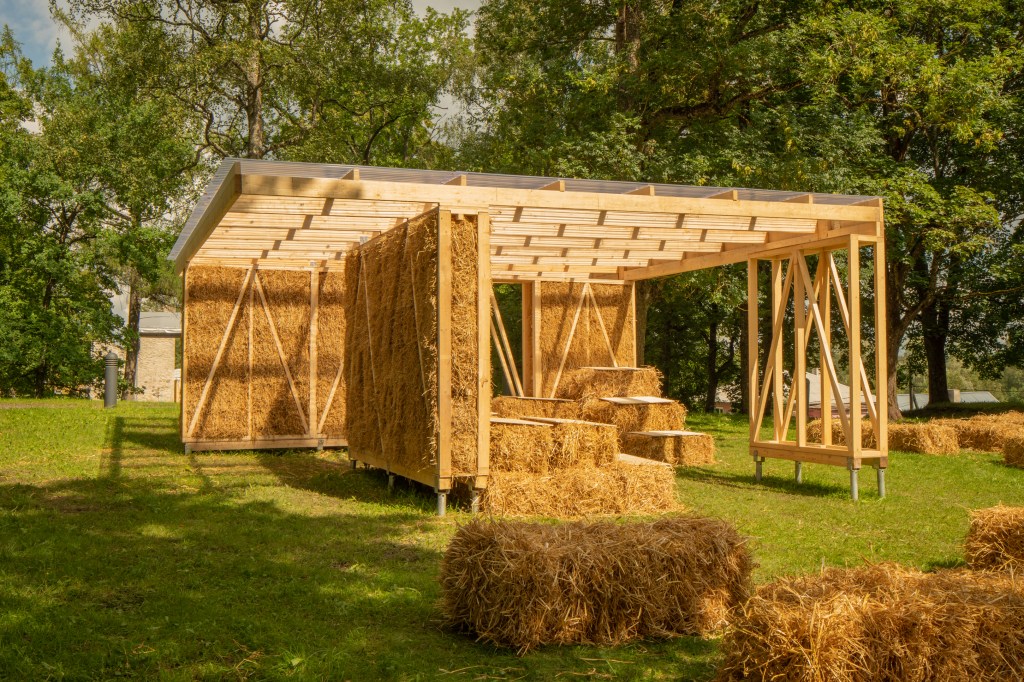
The construction of PÕHULA(va) summarizes well the 15-month research process, which captured the concept of a 1+X system covering design, construction process, field-to-field construction.
PÕHULA(va)
Installatsioon pakub erinevaid kihte – arvamusruum, lava, pavilion, näitus, kooliruum. Ka kihid ise saavad pakkuda erinevaid variatsioone, kus tekib erinevaid võimalusi lava kasutuseks kui ka näiteks koolitundide läbiviimiseks. Varieeruvad funtksioonid kutsuvad endasse ka eriilmelisi külastajaid. Installatsioon on avatud igast küljest, et ruum toimiks läbipaistvalt, külgedelt saavad inimesed läheneda laval toimuvale. Ka katusekattematerjal soosib läbipaistvust, et ruum oleks võimalikult avar ja valgusküllane. Ruumi saab jaotada mitmeks – lavaala, publikuala ning ka 1+Xi näituseala, kus kogu 15 kuu protsess kajastub läbi plansettide. Samas need alad läbi avatuse on omavahel ühenduses.
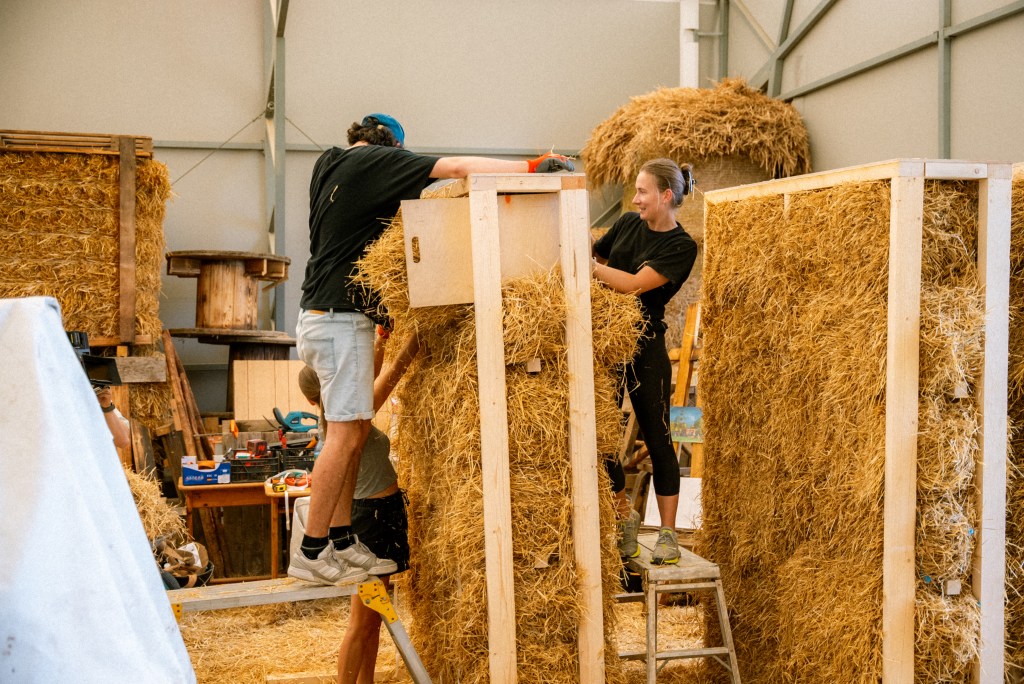
Paneelide, vundamendi, katuse ehitus, paneelide transport, tõstmine ja kinnitamine – just sellistest etappidest koosneski installatsiooni ehitus. Kogu ehituse vältel oli meile abiks loodusehituse koolitaja Sven Aluste. Põhupaneeli ehitusest saite täpsemalt lugeda eelmisest blogi postitusest. Ainus asi, mis ehituse puhul muutus oli puitkonstruktsioon, kus ikkagi lõpuks me tappühendusega edasi ei liikunud, sest katuse jaoks seda enam vaja ei olnud. Kokku oli vaja ehitada 8 paneeli, millest põhuga täidetud oli 6 ning ainult puitkonstruktsiooniga 2. Testpaneeli ehitusega saime ühe valmis, loodusehituse koolituse kaudu sai teine paneel valmis. Järgneva kuue paneeli puhul ei lähtunud enam paneeli keskselt vaid just tööülesannete järgi. Alustasime kõikide paneelide puitkonstruktsiooniga, siis põhuga täitmine, põhuseinte trimmimine ning viimaseks osaks oli diagonaalide kinnitamine põhu sisse tehtud soontesse.
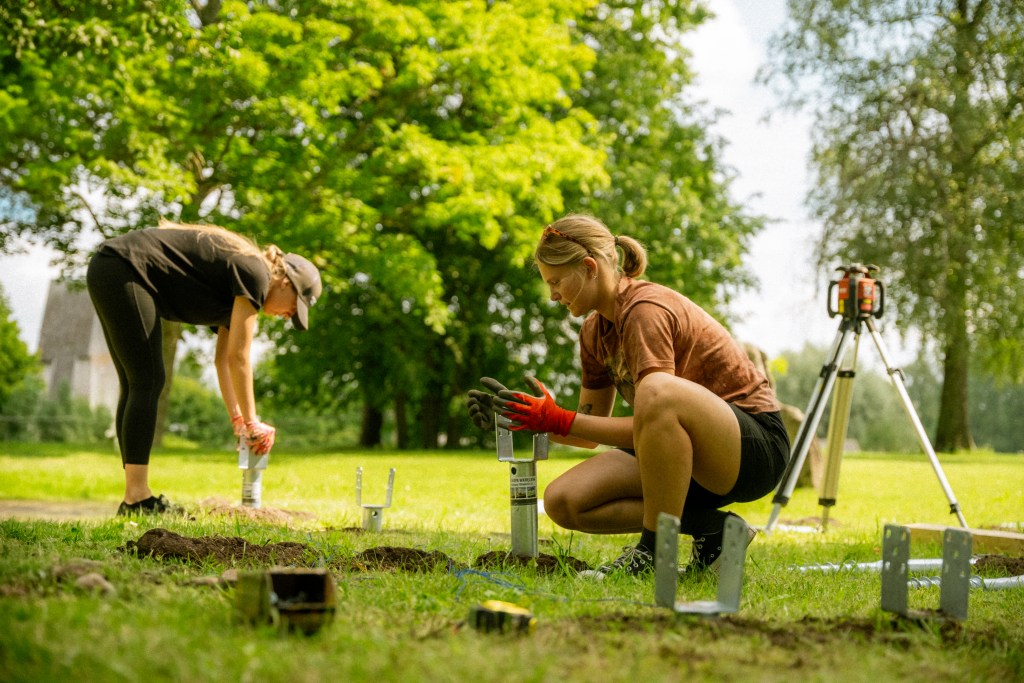
Vundamendi ehitus algas esmalt täpse asukoha välja mõõtmisega ning kui asukoht paigas, hakkasime välja mõõdistama installatsiooni kontuuri. Kaks olulist tööriista vundamendi ehitusel oli mootoriga puur ning laser nivelliir. Järgmine samm oli aukudesse kruvimine, mis oli üpriski ajakulukas töö, sest vundament peab ikkagi korralikult loodis olema. Selle jaoks oli meil nivelliir, mille abil said kruvivaia samale kõrgusele. Kruvivaiade peale kinnitusid prussid, mille peale omakorda järgmine päev kinnitasime paneelid.
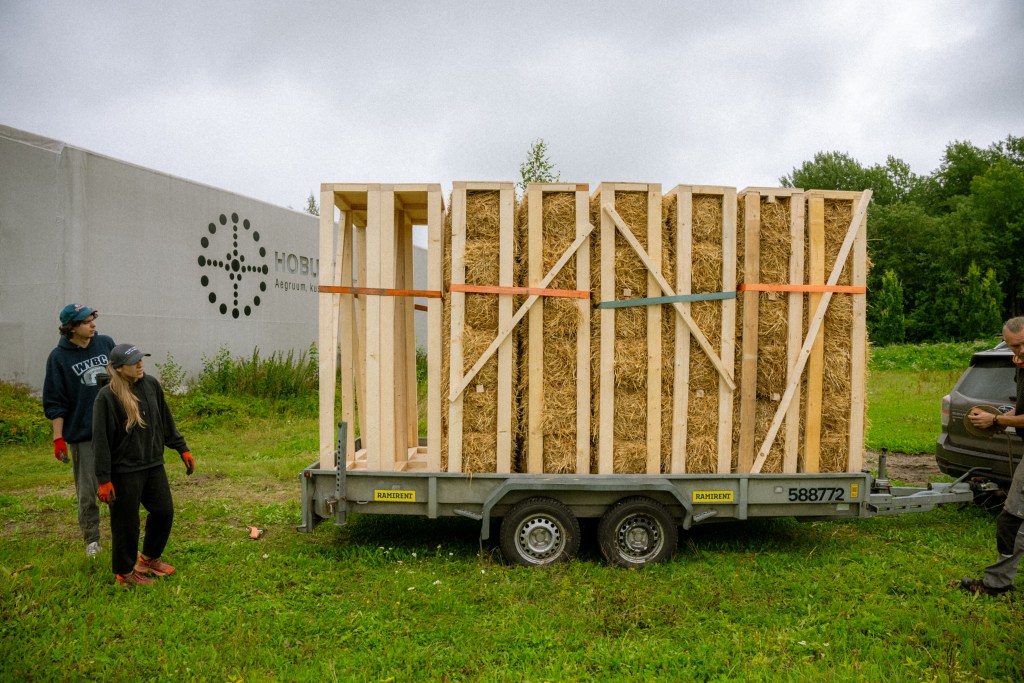
Kuna paneelid ehitasime valmis Hobukooli Pargis, mis asub Paide Vallimäest ca 15 minuti autosõidu kaugusel, siis neid pidi transportima autokärus. Vallimäel ootas juba ka tõstuk, millega saime paneelid tõsta vundamendi peale.
Üheks kõige väljakutsuvamaks nii projekteerimise kui ka ehitus protsessi puhul osutus katus. Ehitamise päeval aga selgus, et pool materiali oli puudu. Kiiresti-kiiresti tuli kogu päeva plaan ümber muuta ning esmalt leida kiiresti kuskilt sobilik materjal, mille jaoks tuli ekstra Tallinna sõita. Õnneks olid meil kaasas ka mõned sõbrad, kelle abiga sai palju tehtud. Puidu lõikamine ning talade tõstmine ja kinnitus läksid kiirelt. Muidugi kerkisid esile ka viperused seoses projektiga, mille pidime kohapeal ümber mängima. Katusekalde tekkimine muutus seeläbi palju lihtsamaks ja loogilisemaks kui algselt olime mõelnud. Katusekatteks oli meil läbipaistev trapets profiiliga pvc plaat. Kindlasti tuli jälgida, et pvc plaadi omavahelised üleasted oleksid paigaldatud vastavalt, et nende vahelt ei hakkaks vihm läbi laskma.
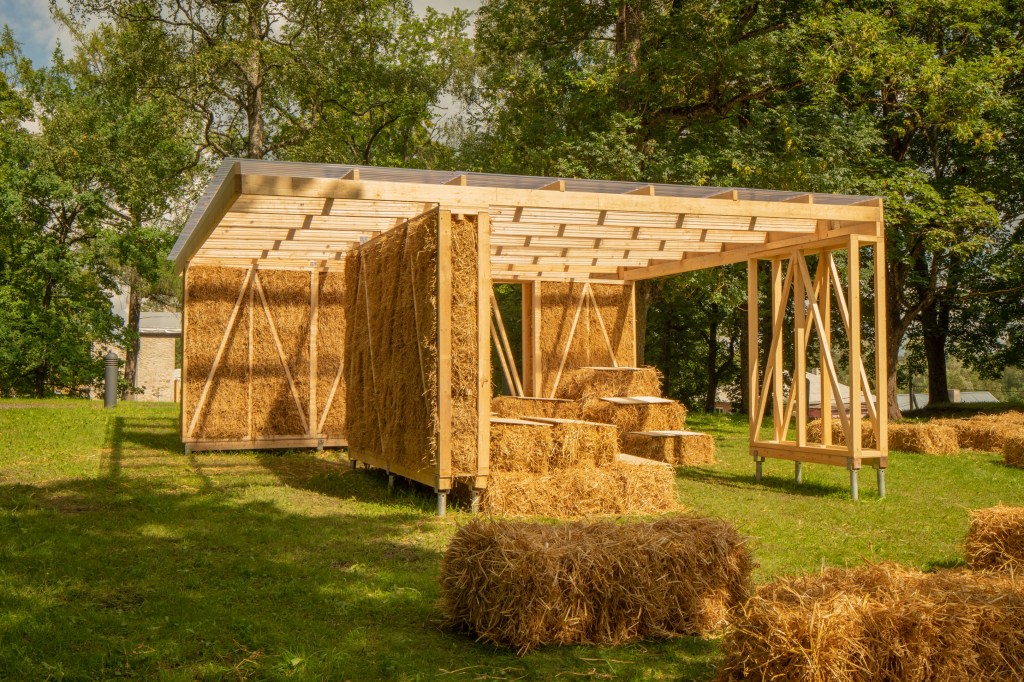
PÕHULA(va) ehitus võtab hästi kokku 15-kuuse teadustöö protsessi, kus on kajastatud 1+X süsteemi kontseptsioon hõlmates projekteerimist, ehitusprotsessi, põllult-põllule ehitust.
 1plussx