


The concept, the system, the design, developed over 15 months, have been brought together in the form of a project, where the housing units have been solved at different scales and also in the typology of an SOS Children’s Village.
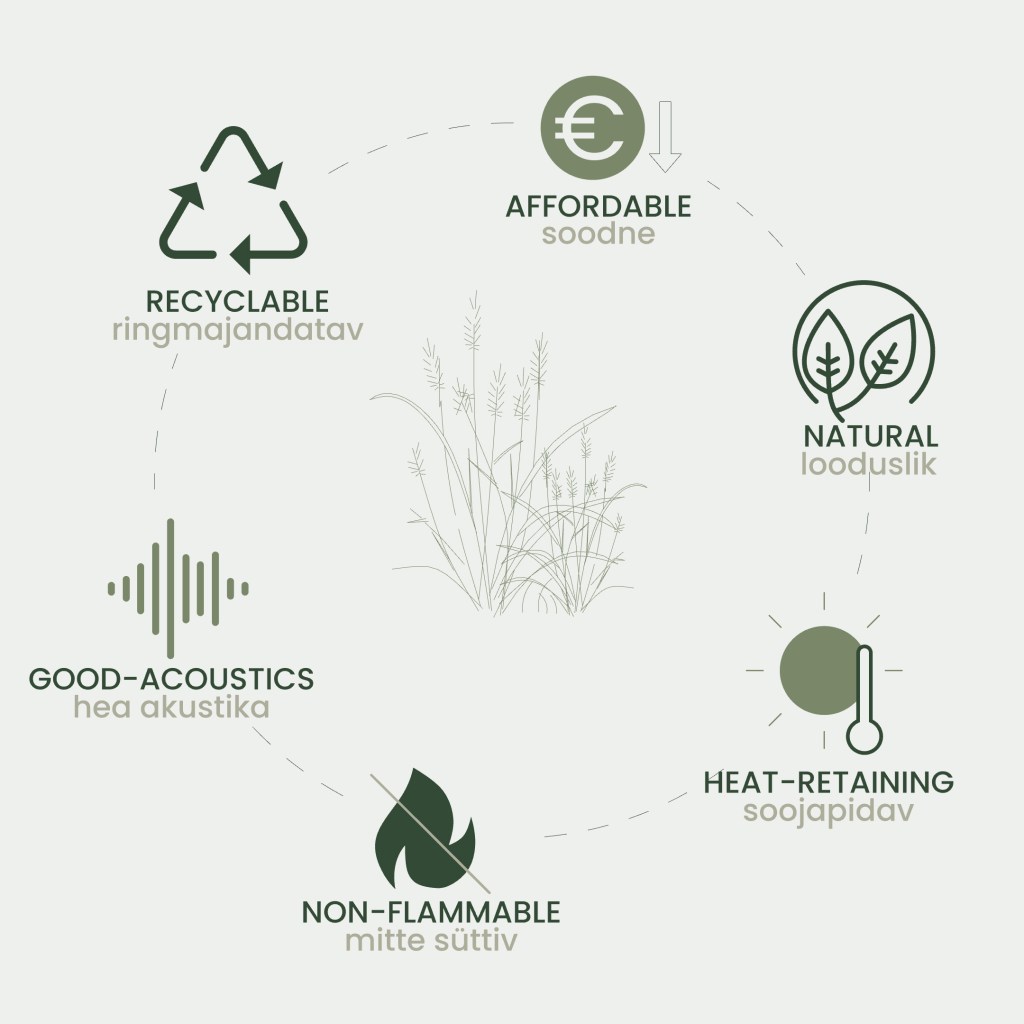
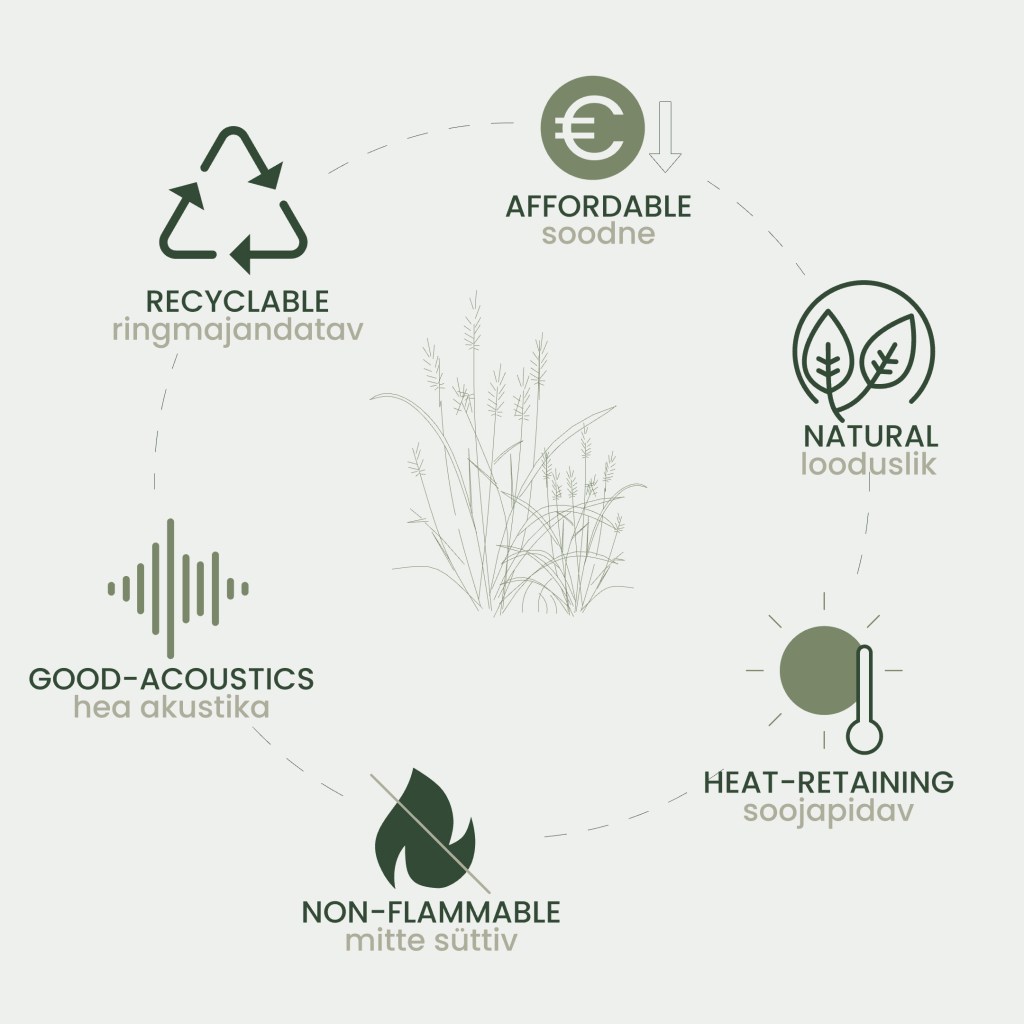
One of the project’s sub-projects has been the concept of material, or straw as a building material, which guides architectural choices from the very beginning of the process. Straw is a natural material that is increasingly used in construction today. As a residual product, it is more environmentally friendly than insulation materials used today. In developing the design system, we have chosen a blow-in straw for thermal insulation. We visited the Iso-Stroh factory in Austria (https://1plussx.com/2024/03/14/viini-kulastus/ ) to learn more about this technology. Blow-in straw insulation is an innovative method that works in a similar way to the installation of thermal insulation like blow-in wool.
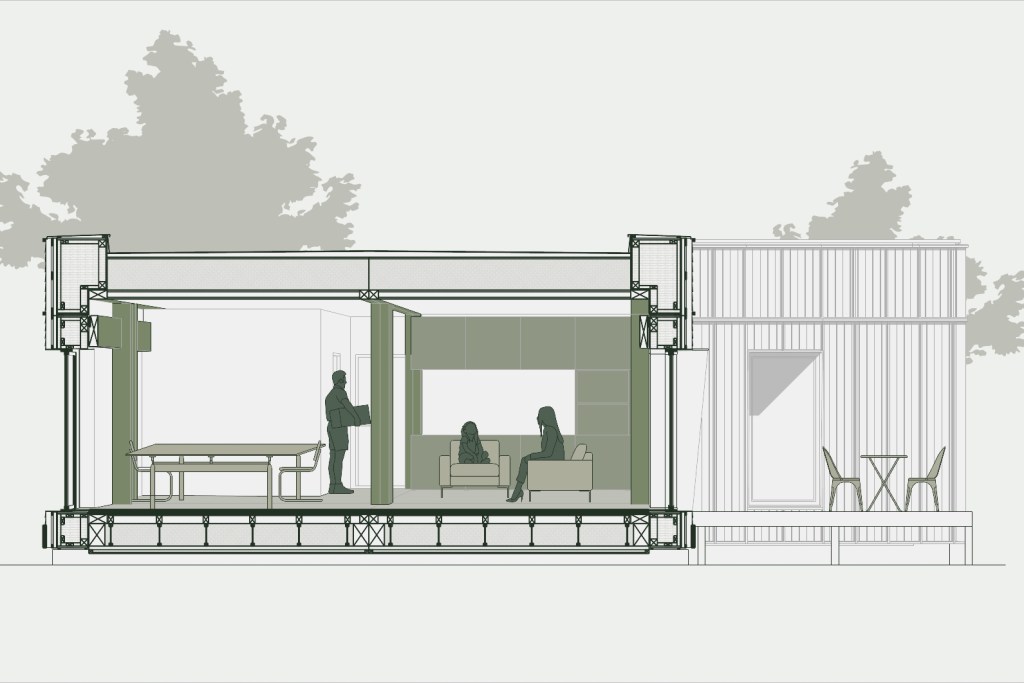
The load-bearing structure of a 1+X system building is built up by first constructing a prefabricated system of posts and beams, on top of which the roof panels are laid. The floor and partition panels and the exterior wall elements are then transported to be installed on a dry-roofed construction site. The dimensions of the panels and other building elements are in accordance with the standard dimensions of the lorry, so that it is not costly, complicated or dangerous to transport the elements.
The 1+X pattern system establishes a 1.2 metre construction grid rule. This grid allows for the convenient creation of appropriately sized bedrooms, living spaces and connections between rooms. The dimensions of the pattern system have been designed taking into account the space for assisted movement to ensure comfortable movement in corridors.

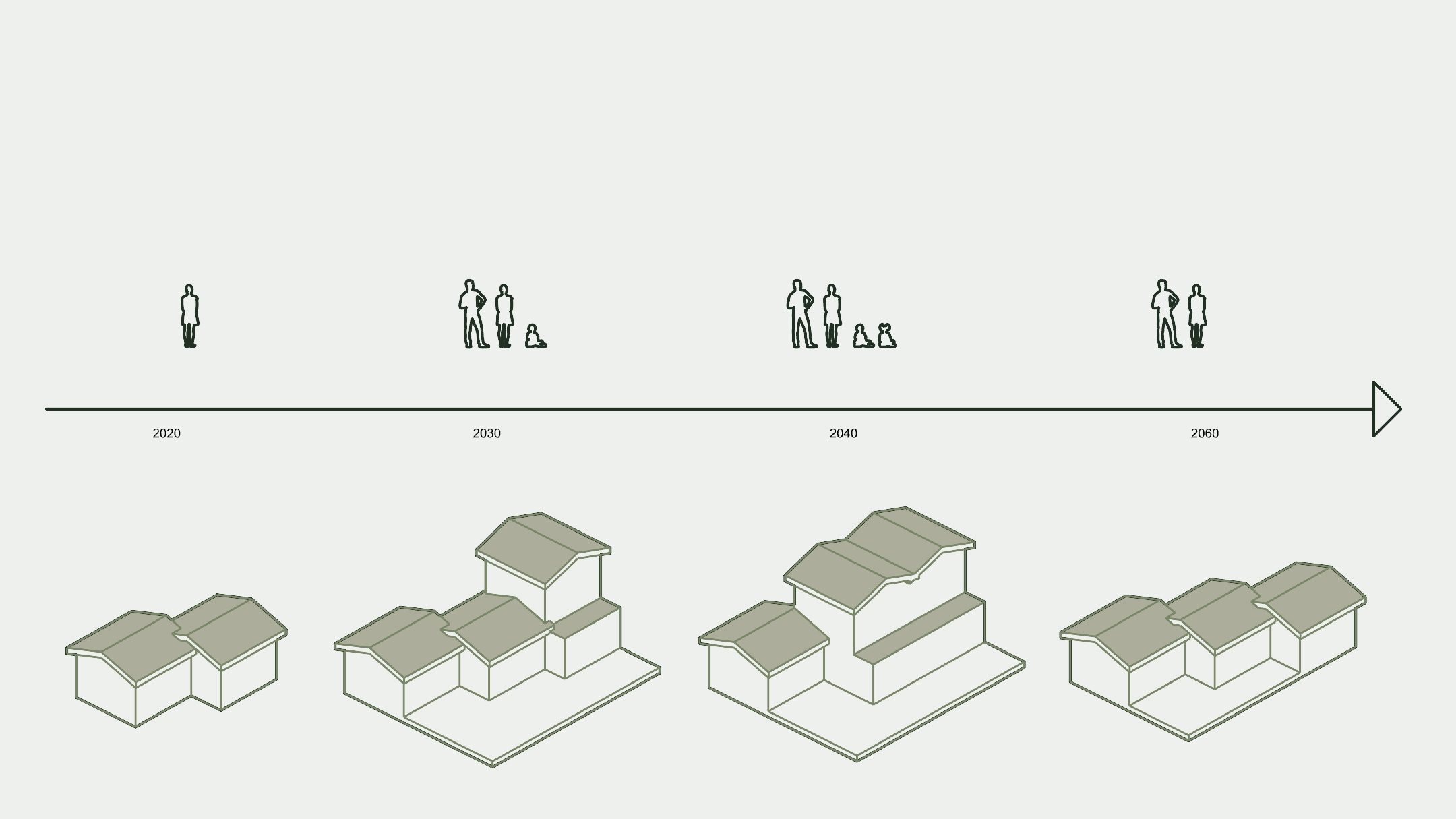
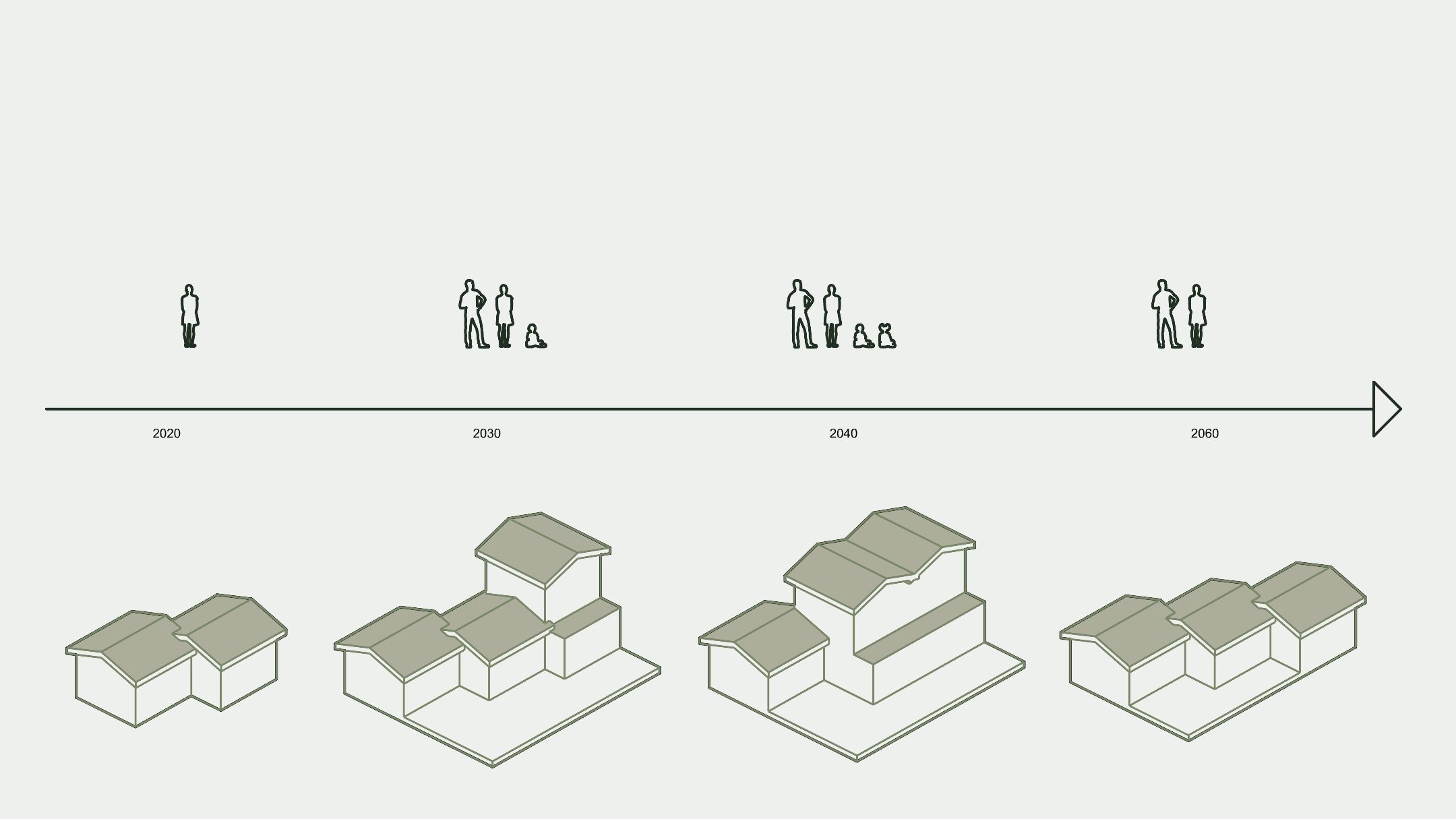
The concept of the SOS Children’s Home was the original input for the 1+X pattern system. The 1+X system has been designed to meet the needs of the orphanage family home, taking into account accessibility, the large number of bedrooms and the speed of construction. The biggest innovation in our system is the flexibility of the buildings to grow and shrink to meet changing legislation and the needs of families. Building on a frame structure allows the system to grow from single-family homes to apartment buildings. This pattern logic also works for apartment building layouts, respecting the requirements for living space in accordance with the law. The concept of apartments is based on the same logic as for single-family houses: each apartment has its own technical module with wet rooms. This allows for an efficient and comfortable layout, where each living space has the necessary amenities and functional zones. The flexibility of the frame structure allows for easy future modification and adaptation of the living spaces to suit the needs.
Through the development of the model building system, we expanded our understanding of the different building design elements and construction methods. We learned about the advantages and disadvantages of modular construction and acquired the skills to design and build a traditional straw house. You can take a closer look at the project here.
Lõpuprojekt
15 kuu jooksul välja töötatud kontseptsioon, süsteem, disain on kokku koondatud eelprojekti näol, kus on lahendatud elamu ühikud erinevatel skaaladel ning ka SOS-lasteküla tüpoloogias.
Üks projekti alastalusid on olnud materjali käsitlus ehk põhk ehitusmaterjalina, mis suunab juba protsessi algusest arhitektuurseid valikuid. Põhk on looduslik ja tänapäeval aina rohkem ehituses kasutatav materjal. Kuna tegemist on jääkproduktiga, siis on see tänapäeval kasutatavate soojustusmaterjalidega võrreldes keskkonnasõbralikum. Mustersüsteemi väljaarendamisel oleme valinud soojusisolatsiooniks puistepõhu. Puistepõhu tehnoloogiaga käisime tutvumas Austrias Iso-Stroh tehases (https://1plussx.com/2024/03/14/viini-kulastus/). Blow-in-tehnoloogia ehk puistepõhu-soojustus on innovatiivne meetod, mis toimib sarnaselt puistevilla soojusisolatsiooni paigaldamisega.
1+X süsteemi hoone kandekonstruktsioon on üles ehitatud selliselt, et esimesena ehitatakse valmis postide ja talade süsteem, millele laotatakse peale katusepaneelid. Seejärel transporditakse põranda- ning vahelaepaneelid ja välisseinte elemendid, et paigaldada neid kuivalt kaetud katusega ehitusplatsil. Paneelide ning muud hoone elementide mõõdud on kooskõlas veoauto standard mõõtudega, et elementide kohaletoomine ei oleks kulukas, keeruline ega ohtlik.
1+X mustersüsteem loob 1,2 meetrise ehitussammu reegli. Selline samm võimaldab mugavalt luua sobiva suurusega magamistube, eluruume ja ruumide vahelist ühendust. Mustersüsteemi mõõtmed on kavandatud, võttes arvesse abivahenditega liikumise ruumi, et tagada mugav liikumine koridorides.

SOS lasteküla maja kontseptsioon oli 1+X mustersüsteemi algseks sisendiks. 1+X süsteem on välja töötatud vastavalt asenduspere kodu vajadustele, arvestades ligipääsetavust, magamistubade rohket arvu ning kiiret ehitust. Suurim uuendus meie süsteemis on hoonete paindlikkus kasvamise ja kahanemise osas, mis vastab muutuvale seadusandlusele ja perede vajadustele. Raamkonstruktsiooni toel ehitamine võimaldab süsteemil kasvada ühepereelamutest kuni kortermajadeni. See mustriloogika toimib ka kortermajade planeeringute puhul, järgides eluruumidele esitatavaid nõudeid vastavalt seadusele. Korterite kontseptsioon põhineb samal loogikal nagu ühepereelamutel: igas korteris on oma tehniline moodul koos märgruumidega. See võimaldab efektiivset ja mugavat ruumilahendust, kus igal eluruumil on vajalikud mugavused ja funktsionaalsed tsoonid. Raamkonstruktsiooni paindlikkus võimaldab tulevikus hõlpsasti muuta ja kohandada eluruume vastavalt vajadustele.
Mustersüsteemi abil hoone arendamise käigus laiendasime oma arusaama erinevate hoone konstruktiivsete elementide ja ehitusmeetodite kohta. Õppisime tundma põhuehituse eelised ja puudused ning omandasime oskus projekteerida ja ehitada ka traditsioonilist põhumaja. Süvitsi saab projektiga tutuvuda siin.
 1plussx