
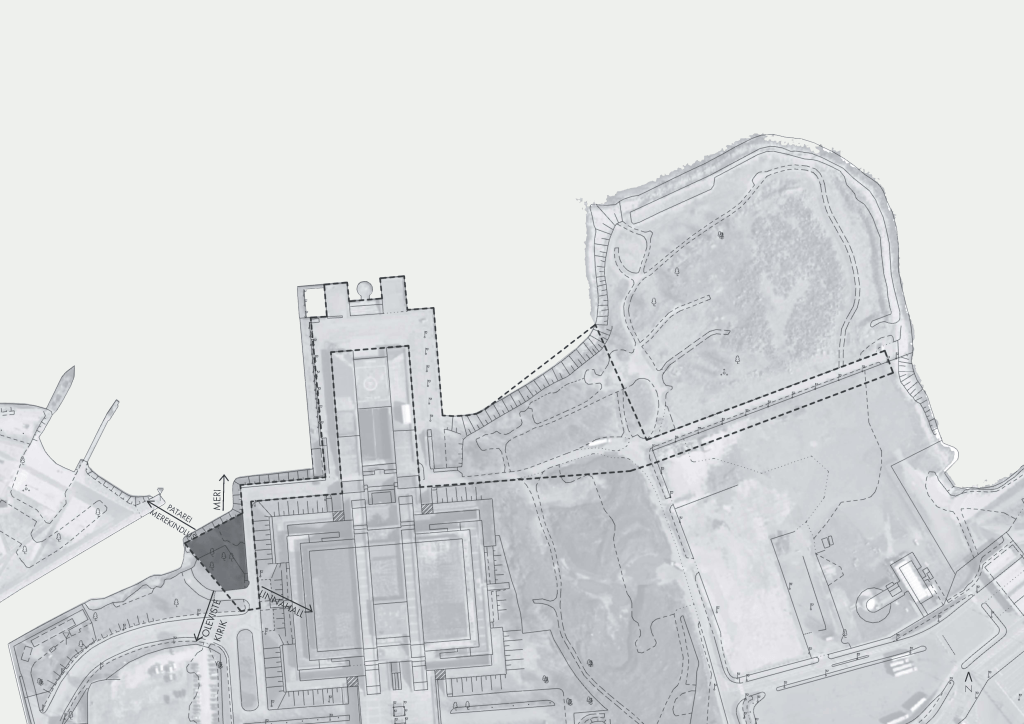
site plan
Plants play a more important role in our environment than we realise. They provide food, air, shelter. At the same time, most plants are not at all familiar to many people, because they are not common anymore in (urban)environment.
In order to reduce plant blindness (the expression plant blindness, which stands for the inability of humans to perceive plants in everyday life or to regard them as secondary). In our installation we have decided to use a very important and multifunctional plant in – the barley.
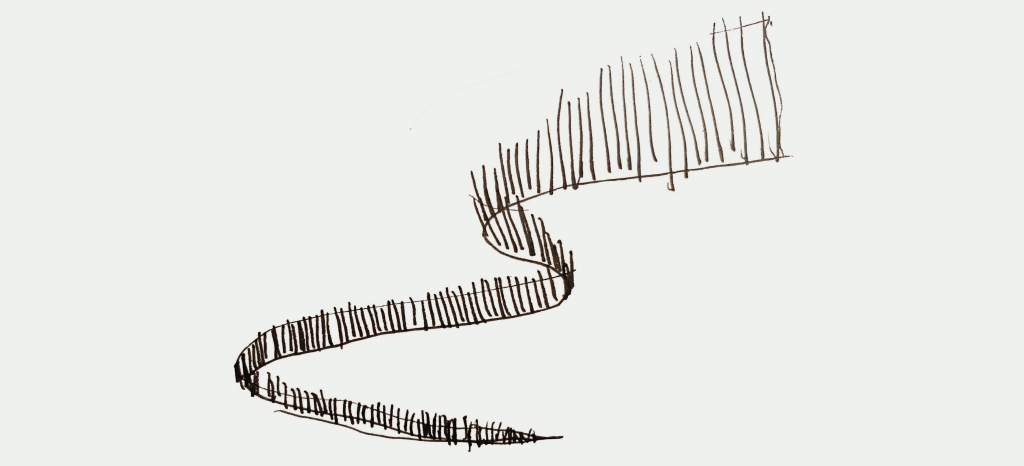
visual
KAMA (in the sense of food made from barley flour, in estonian): barley plants are sprouting from some straw bales, which are also the authors of the structural material used in the project.
KA MA (as in whatever or never mind, in estonian): the design is based on site specific guidelines while at the same time contradicting to them.
KA MA (also me or me too, in estonian): community involvement would be in the building of the installation from the straw bales, the planting of the barley and the use of the resulting space for example for exhibitions and events to promote the different uses of barley.
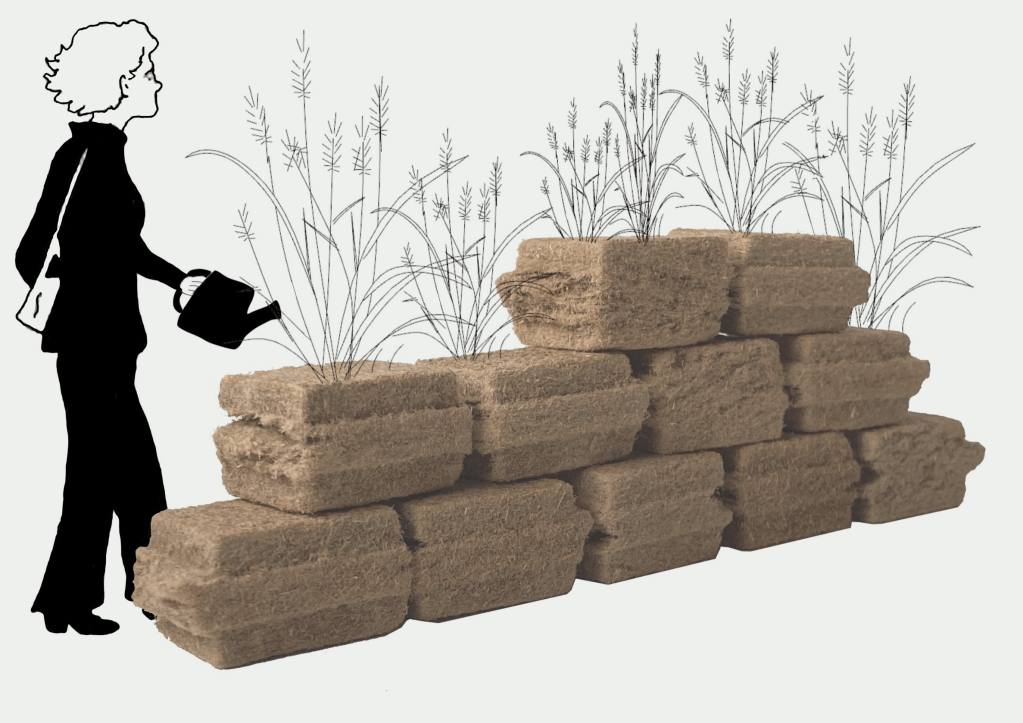
visual
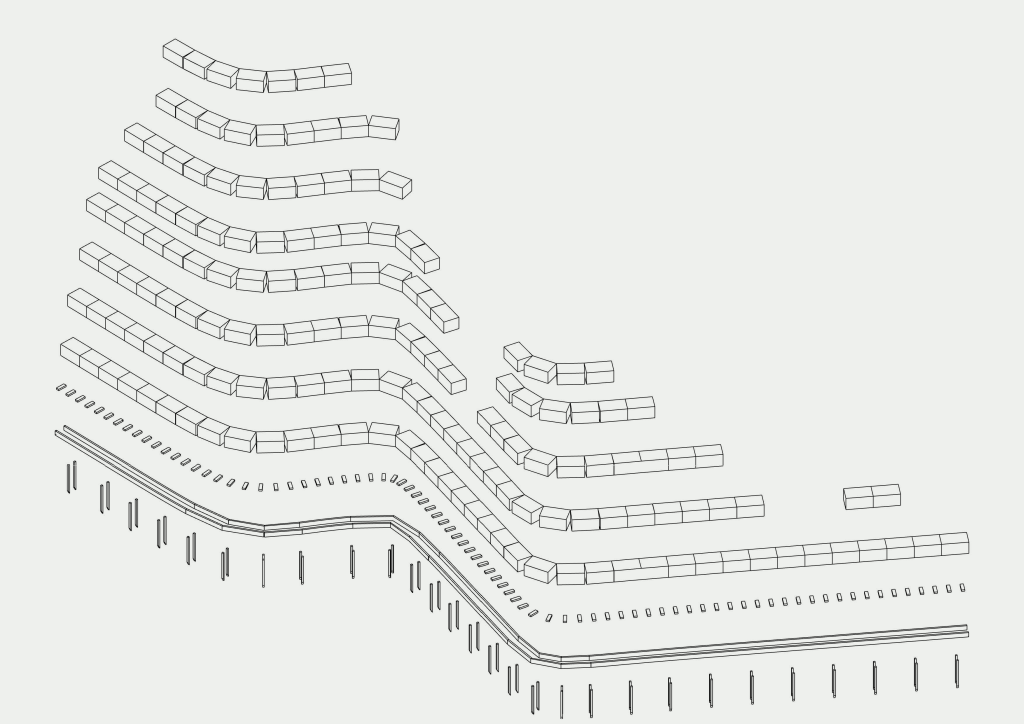
construction scheme
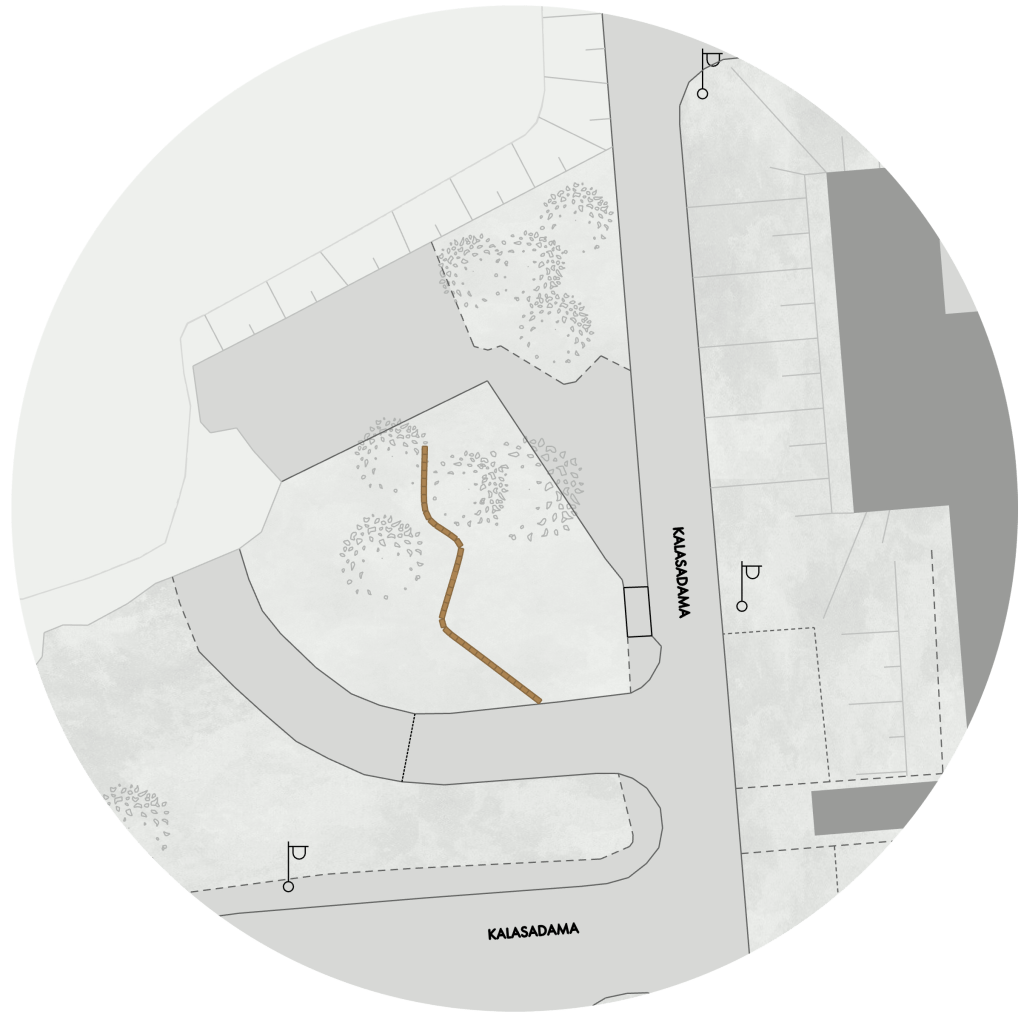
plan
In contrast to the artificiality surrounding the City Hall, the KA MA is sinuous. The structure of the installation was formed according to the direction of views. When we walk straight, our sense of perception disappears, we pay little attention and move more automatically. Moving through a curved space makes people notice and become part of the space as they move.
KA MA gallerys works are framed views of the surrounding environment. In this way, the gallery guides people to notice what is already around us. The selected views include Oleviste Church, Patarei sea fortress, Linnahall and Aegna Island.
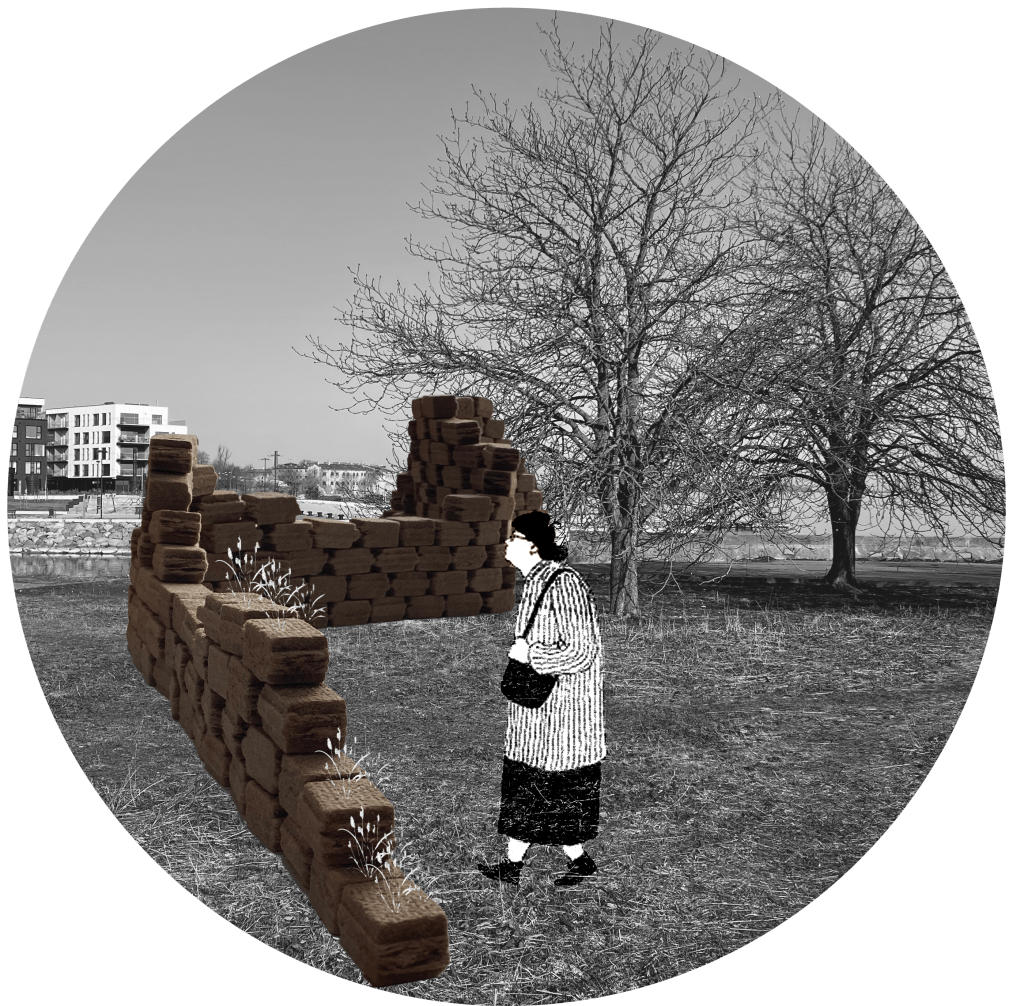
The first section of KA MA is addressed to the author of the straw, the barley plant. Barley is the first crop of the Western Civilization, used as early as the first millennium BC. In order to focus attention and provide a habitat for both micro- and macro-inhabitants, the first section of the barley gallery shows barley growing in straw bales.
The second section of the KA MA focuses on the straw bales. Straw, used as a building material, consists of plant stalks, grainless grain heads and leaves. Straw can be obtained from a variety of crops, including barley. The straw bales are positioned in such a way that they can be sat on or leaned on and even climbed on top of. Smaller size straw blocks (40x50x90cm) have been used in order to be able to play with the shape of the structure. The straw is a natural and warm material. In this section, the straw has not been protected from the environment to show how the climate affects the bales.
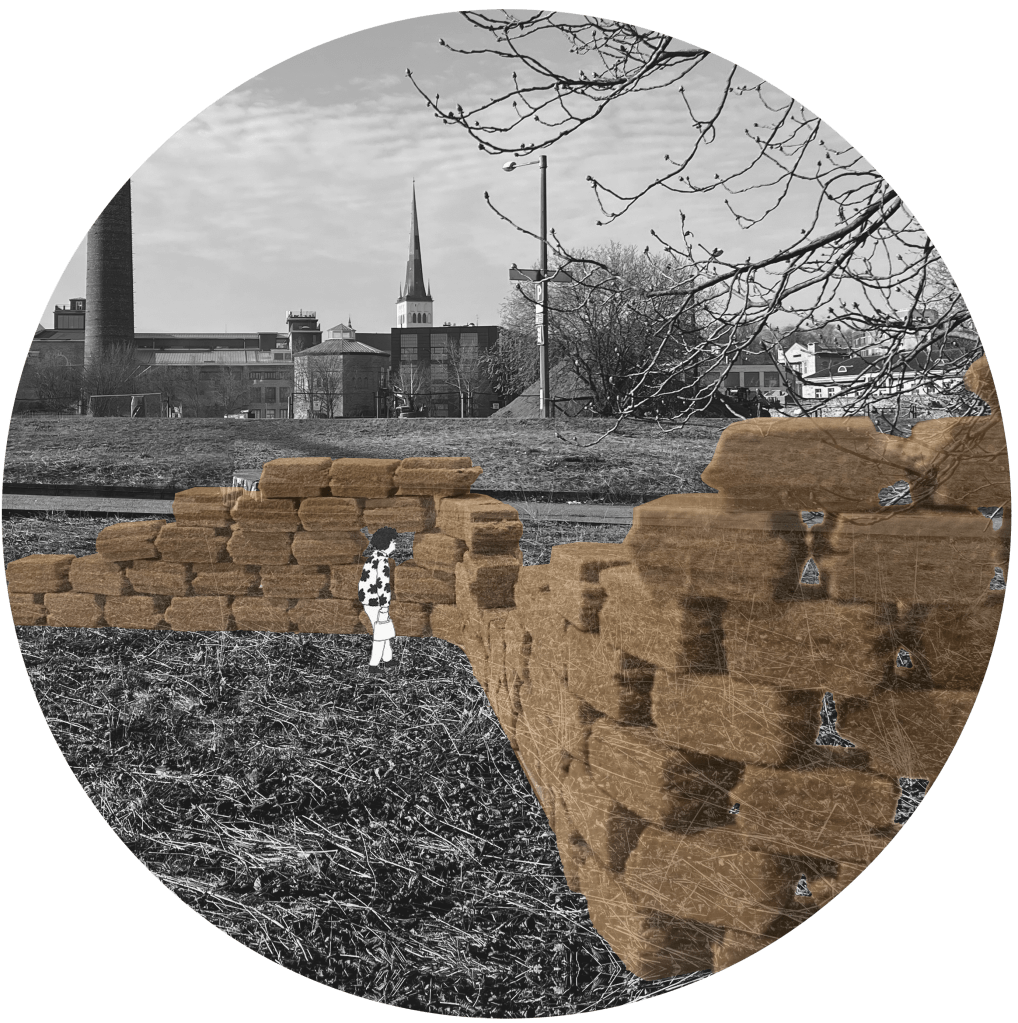
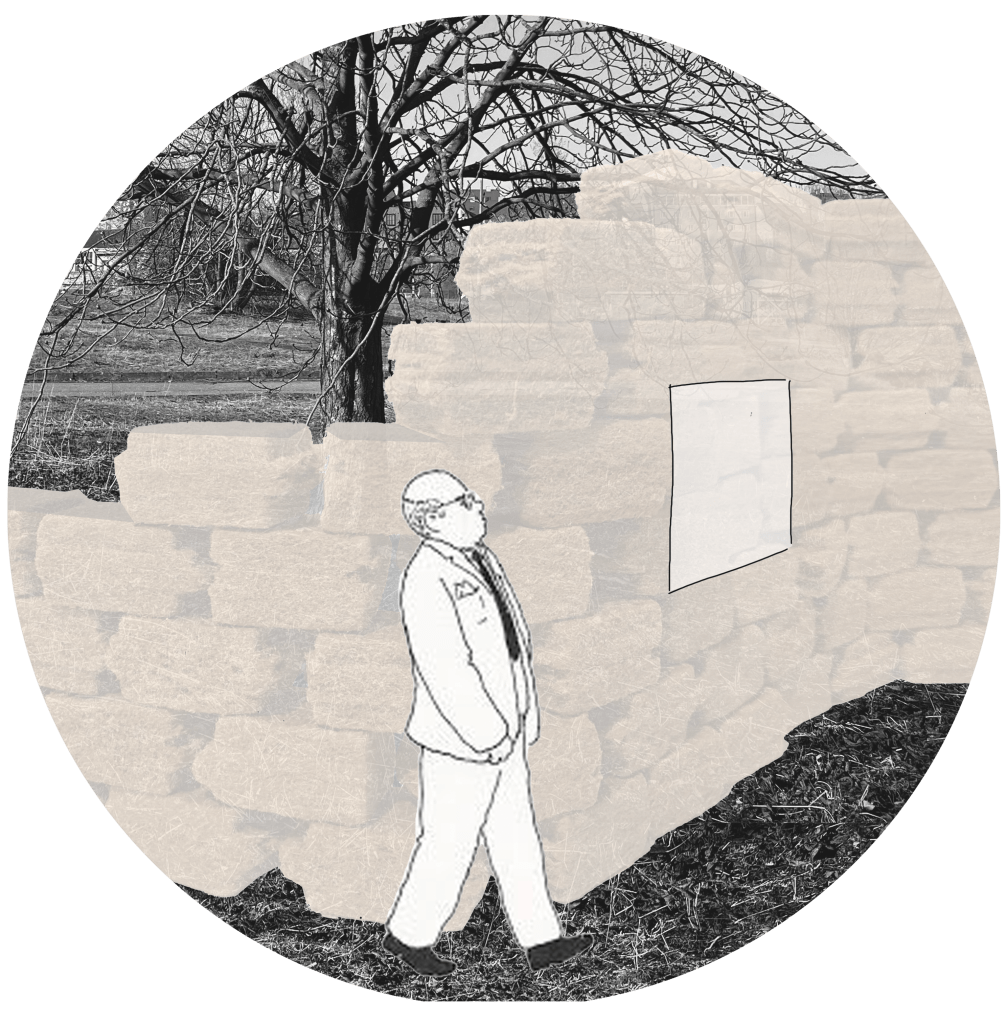
The third and last section of the Barley Gallery relies on the idea of the straw stack. The straw stack is a triangular structure made to dry the straw on wood. “Although the stinging pains from the haymaking in the hay barn as a child made my whole body itch in the sauna in the evening, the memories of that time spent working together are very fond. I also remember how the space under the haystacks was always a very inviting and exciting place to play.” – M.T.K. The stack structure is visible in a new form in the KA MA side view.
 1plussx