
“гниздо – a nest” is a sample solution of an element-based family house created in a pattern system. It was created based on the concept of an SOS Children’s Village, where up to 8 children could live with parents.
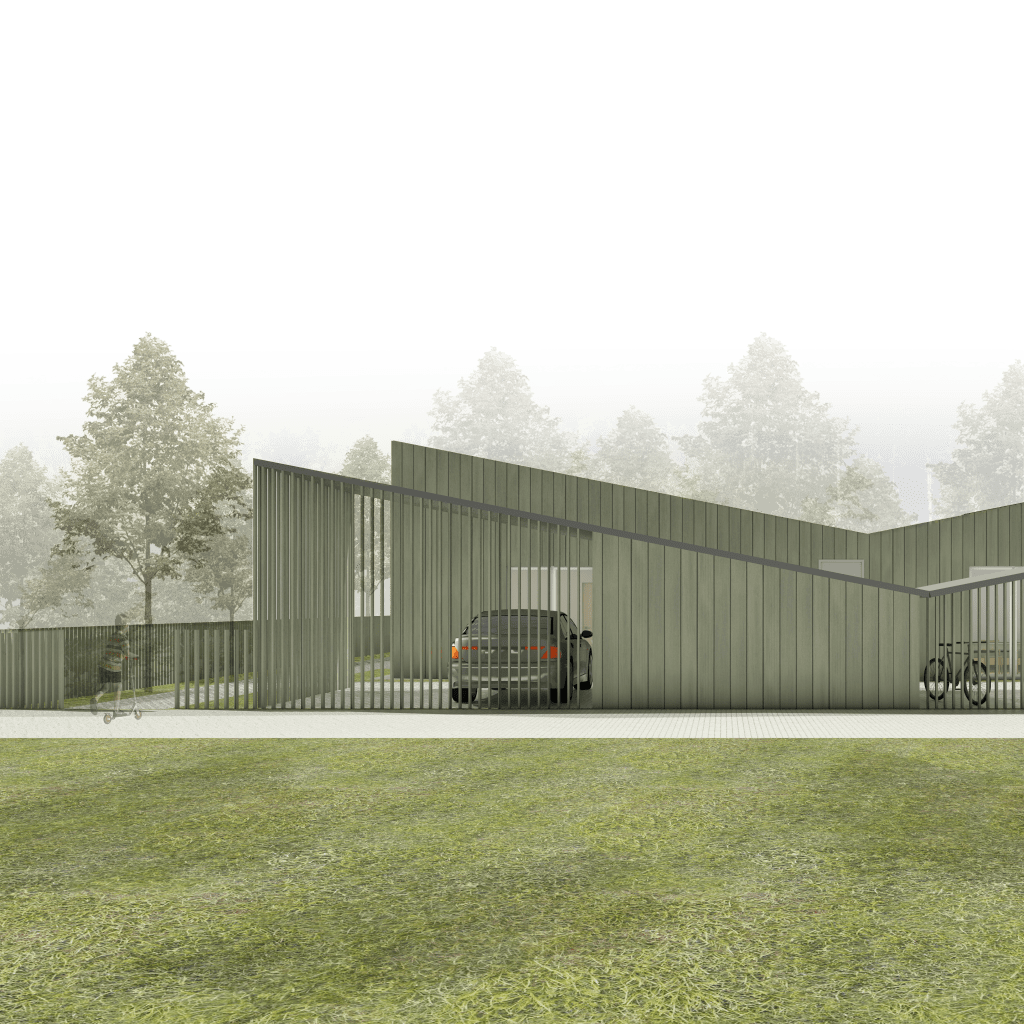
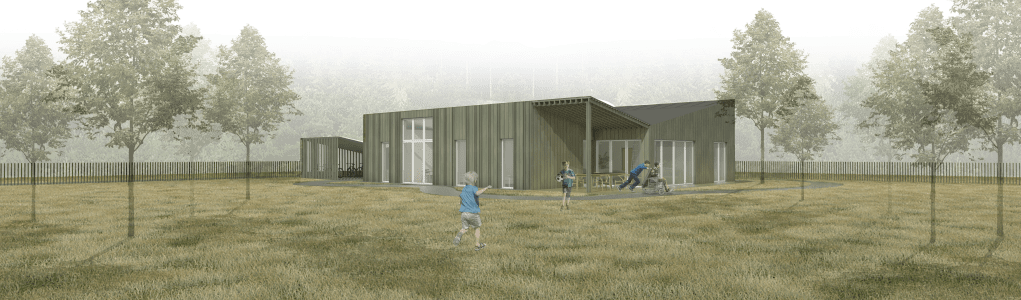
view to the external space
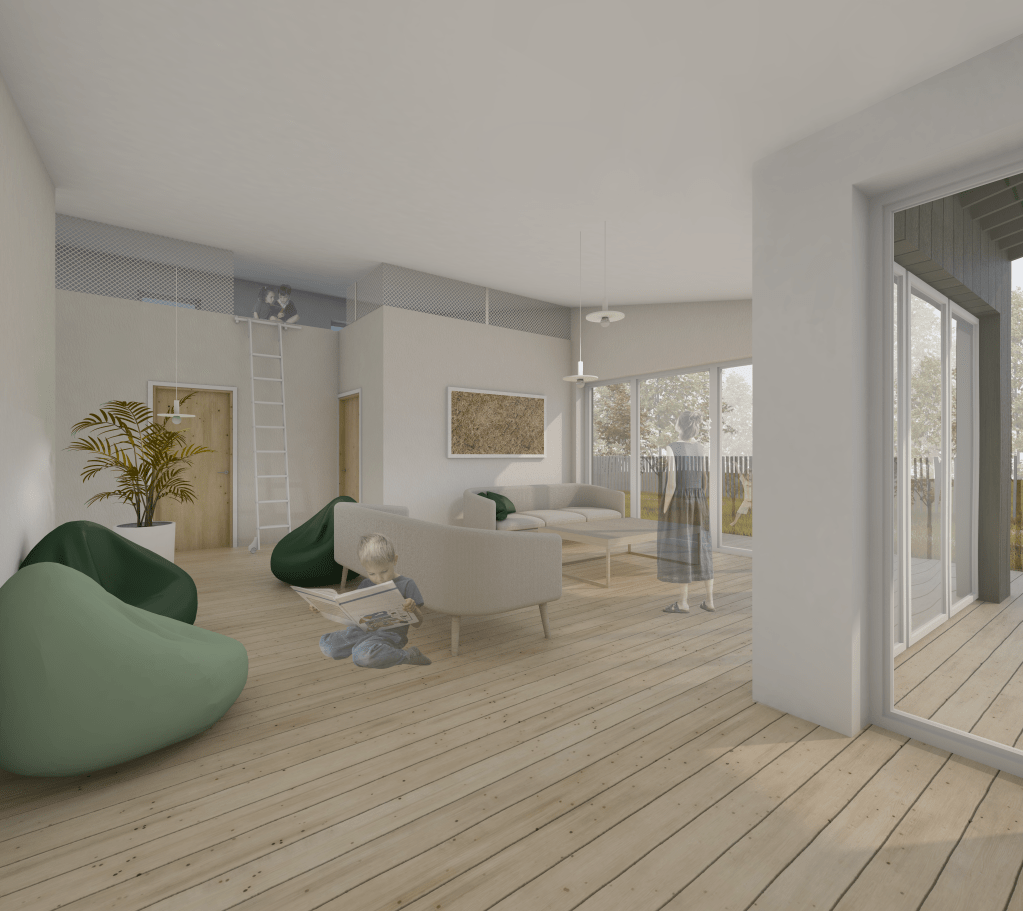
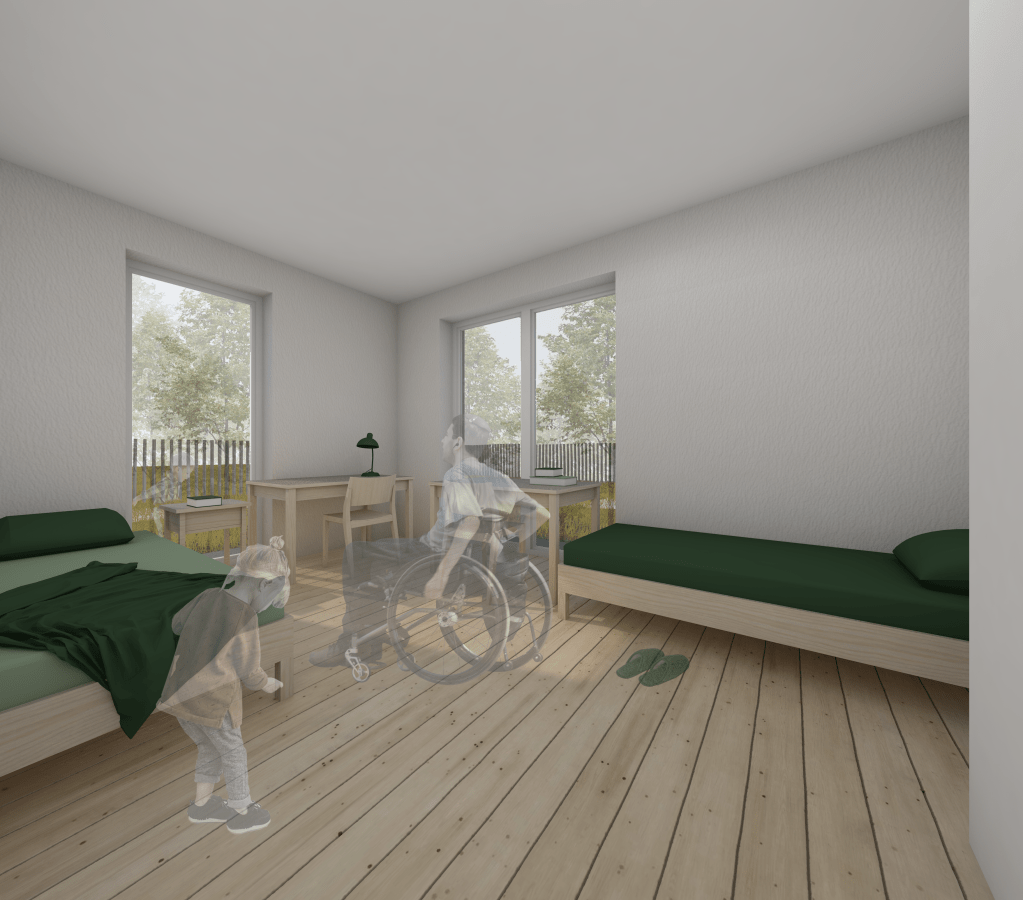
view to the internal space
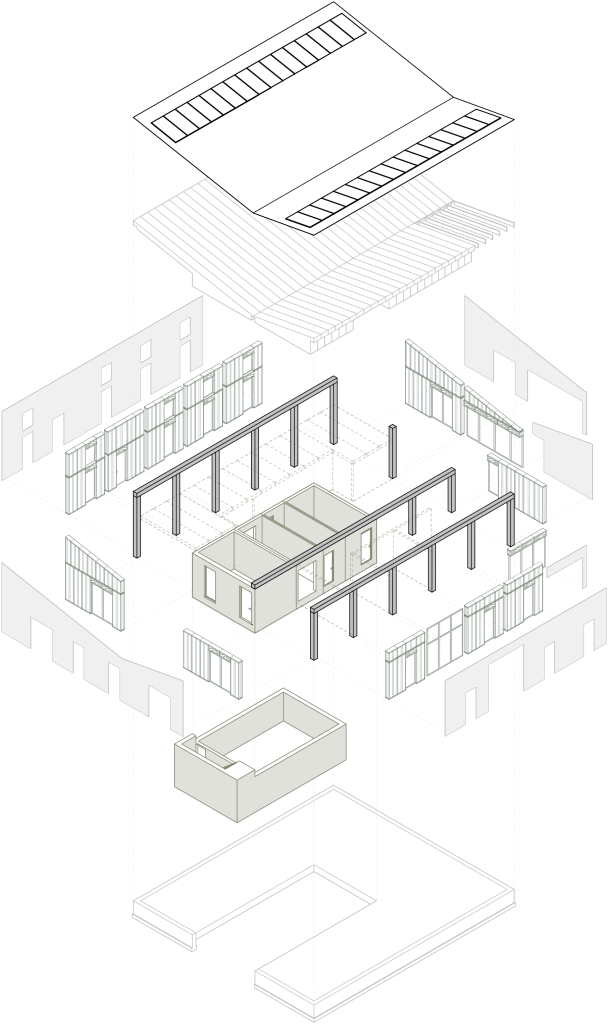
construction scheme
Architecture
The created pattern is a simple, logical and rational system that follows a grid with a spacing of 1.65 meters. Within this system, different building solutions can be created based on the same principles. This allows for more economical construction, because of the use of pre-produced elements and modules the transport costs, production and construction can be more sustainable. The pattern system itself is flexible in terms of both the roof shape and the structure to avoid an ordinary design. Each building can have a different character and a unique solution based on the system.
It is the roof that gives identity to a building with a simple shape, which adds originality, flexibility and promotes diversity. The architectural solution of the roof can be with a traditional ridge and eaves or create spatial excitement, where the heights of the ridge and eaves are in the opposite relationship, i.e. turned negative.
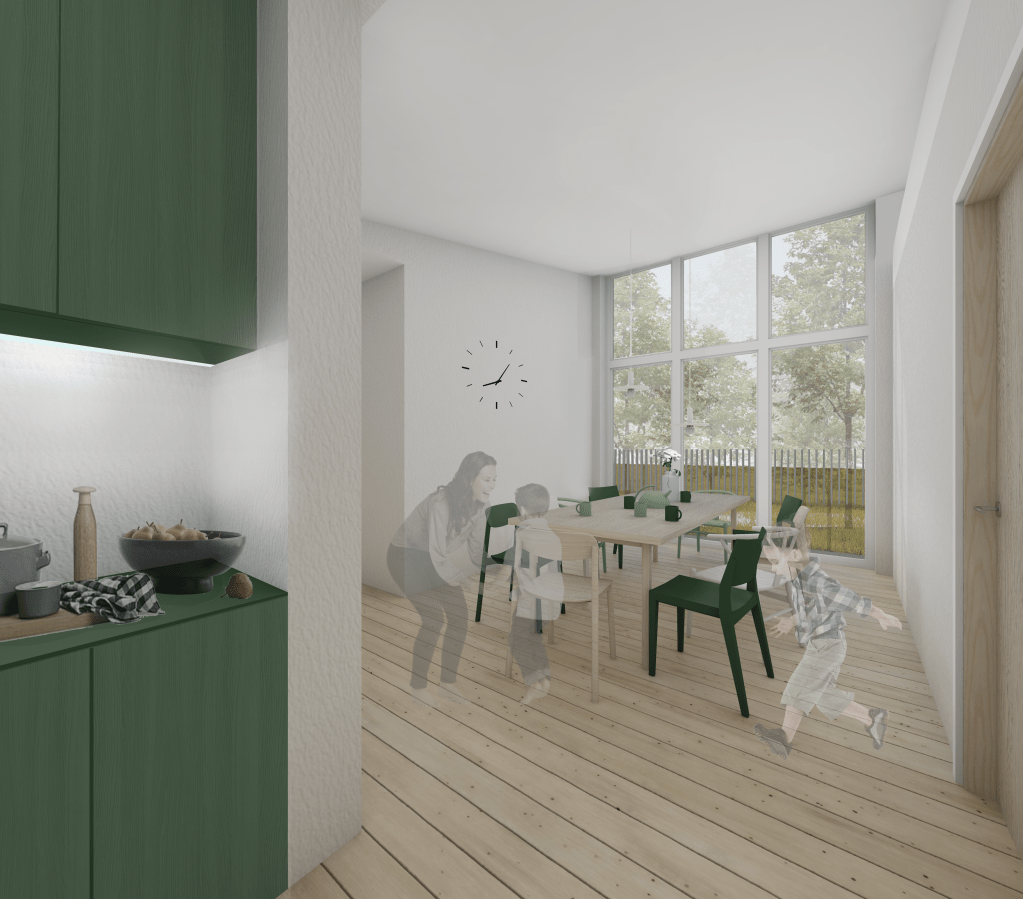
view to the internal space
Outdoor space
The building is placed on the site in such a way that it is similar to an indoor space for creating exciting spaces for different kinds of activities. The footpath around the building follows the principles of indoor space and offers comfortable movement for children with disabilities through the courtyard area. The pavement of the footpath can follow the principles of the circular economy, enabling the reuse of materials from buildings damaged in the war.
Indoor space
The spatial concept is based on the technical module as the heart of the building. The technical module includes a tehnical room, a houskeepingroom and wet rooms, including kitchens and bathrooms. This module acts as a connecting link between the living spaces, allowing movement through the kitchen and thereby connecting the entire building into an integral whole. The circular movement between the technical module and the living spaces creates an exciting experience inside the building. This, in turn, is also important for children with mobility impairments, as there are no dead ends in the building, it is possible to move with a wheelchair without turning around. The circular solution also offers fun games for children.

section
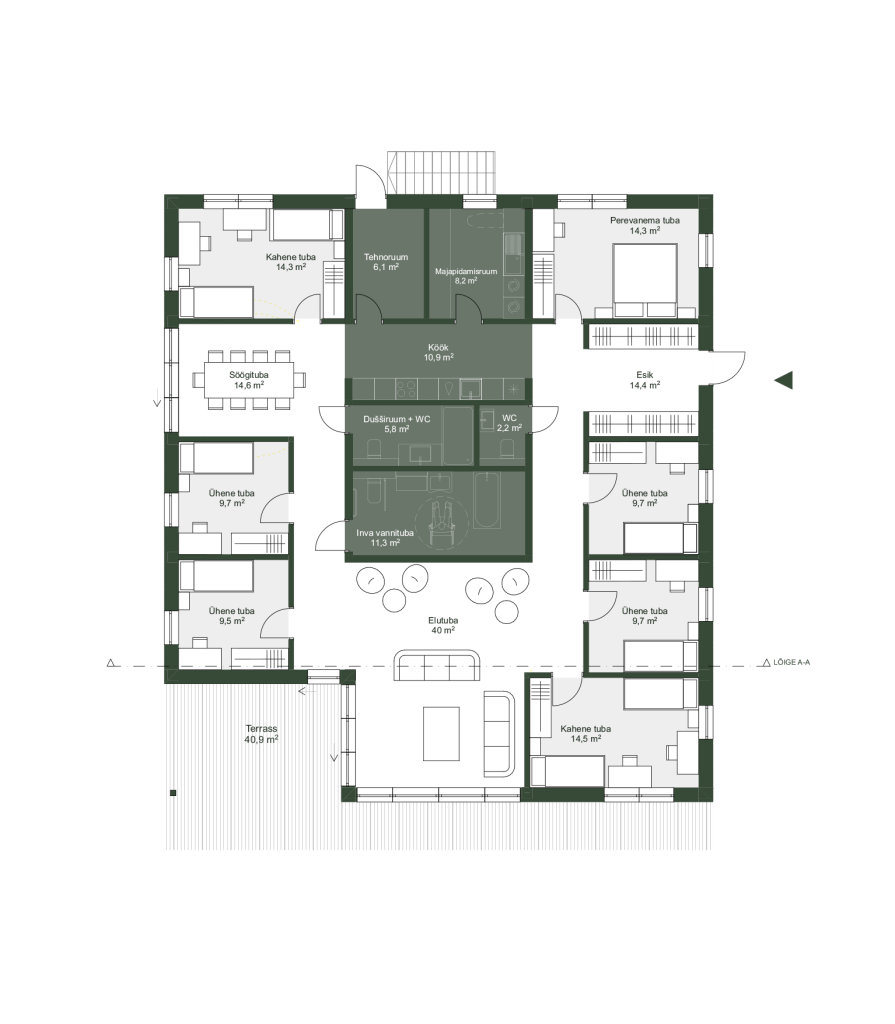
plan
Material handling and energy efficiency
This sample project is created on a wooden structure, where the walls consist of a wooden frame and we use straw as insulation material in the project. Straw is a biogenic material that can be used in construction and does not require separate production, as it is an agricultural by-product. Ukraine is also one of the largest grain growers in Europe and has great potential in the use of straw in construction.
In order to make the construction sector more sustainable, we want to re-introduce old-fashioned and traditional construction methods that are more environmentally friendly. Traditional building materials in Ukraine are wood, straw and clay.
view to the external space
view to the internal space
Authors: Triinu Amboja, Aneth Traumann, Roosmari Kukk, Valerii Krinberg, Liispet Viira, Renee Puusepp, Tiit Sild, Iryna Kirs
 1plussx